
Workers' Day 2026
The question
In 2013, after the Rana Plaza disaster in Bangladesh, Fashion Revolution began asking a question that moved through the fashion industry with unusual force: Who made my clothes?
The movement was founded by Carry Somers and Orsola de Castro in the wake of that collapse. Since then, it has mobilized citizens, brands, and policymakers through research, education, and advocacy, calling for a cleaner, safer, fairer, more transparent, and more accountable fashion industry.
The question worked because it was simple. A shirt has a label. A dress has a price. A pair of trousers has a brand, a size, a barcode, a place on a shelf. The person who cut the fabric, guided the seam, pressed the garment, checked the finish, and packed it for shipment often disappears before the object reaches the body that will wear it.
Fashion Revolution turned that absence into a public question. It asked people to look past the surface of what they buy. It asked brands to explain where their products come from, who makes them, and under what conditions. Its manifesto calls for a fashion system where transparency and accountability are ordinary practices, and where people and the environment carry more weight than growth alone.
For Workers’ Day, AFAR brought that question into its own workshop in Addis Ababa. Who made your bag?
Inside the workshop
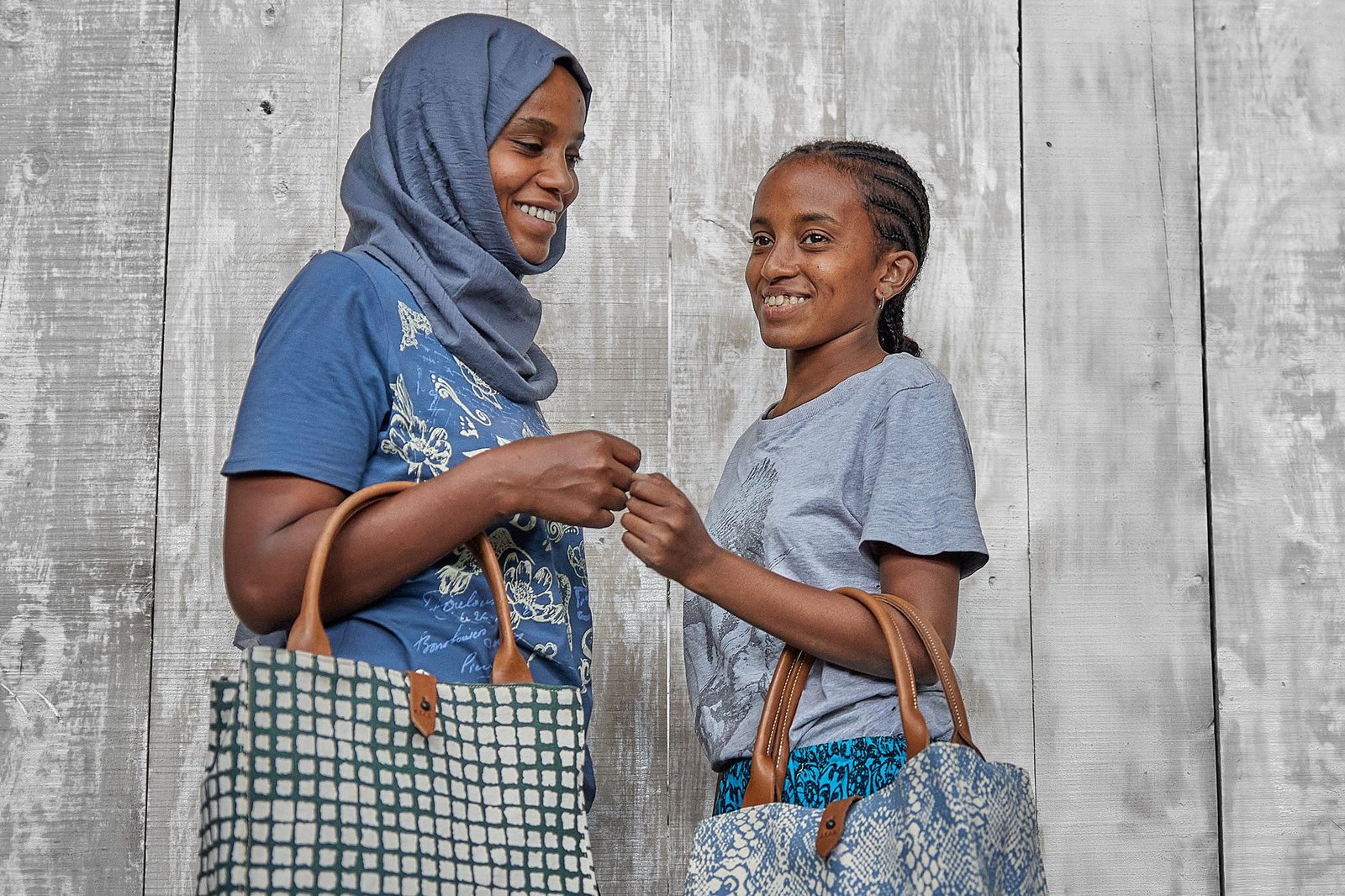
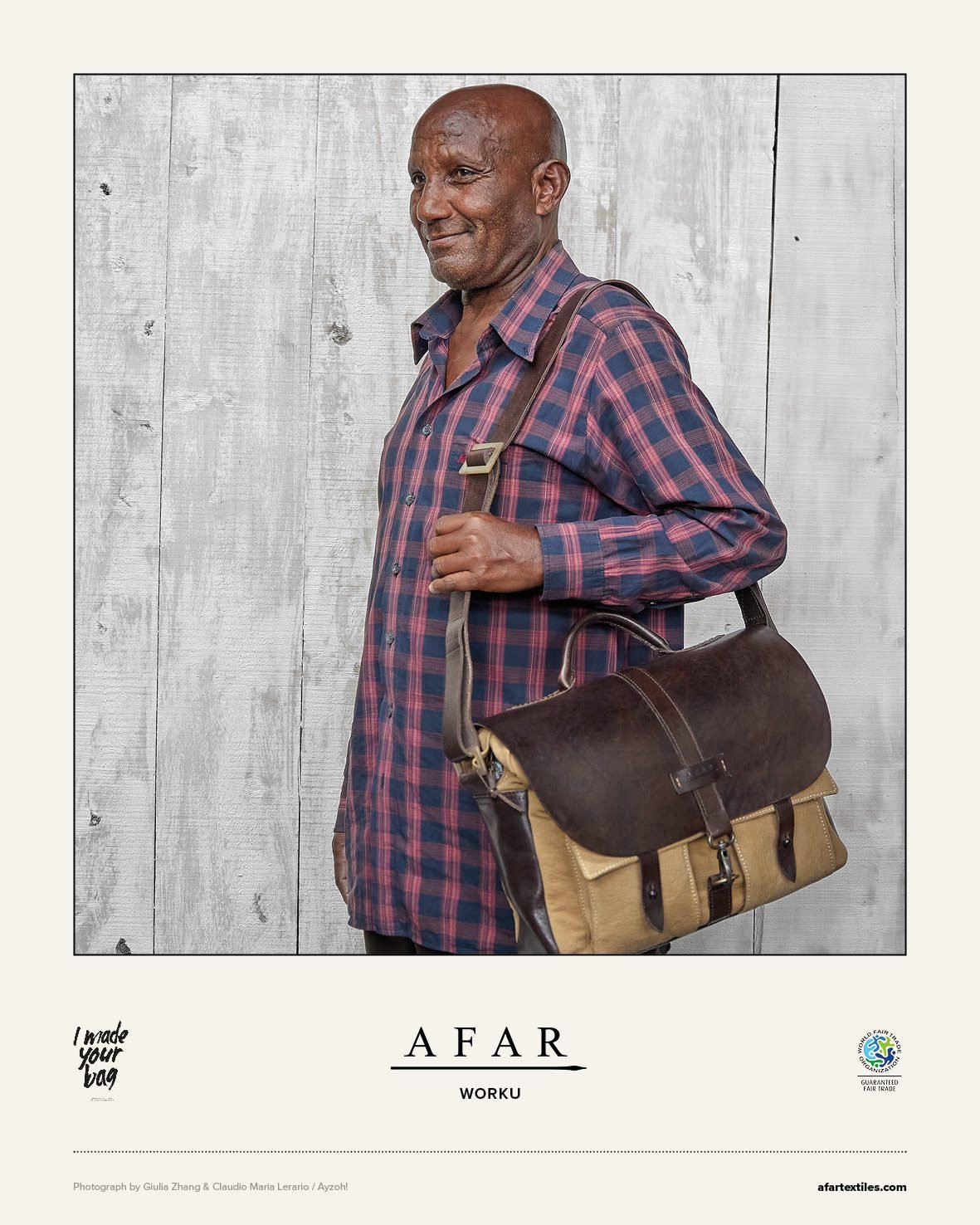
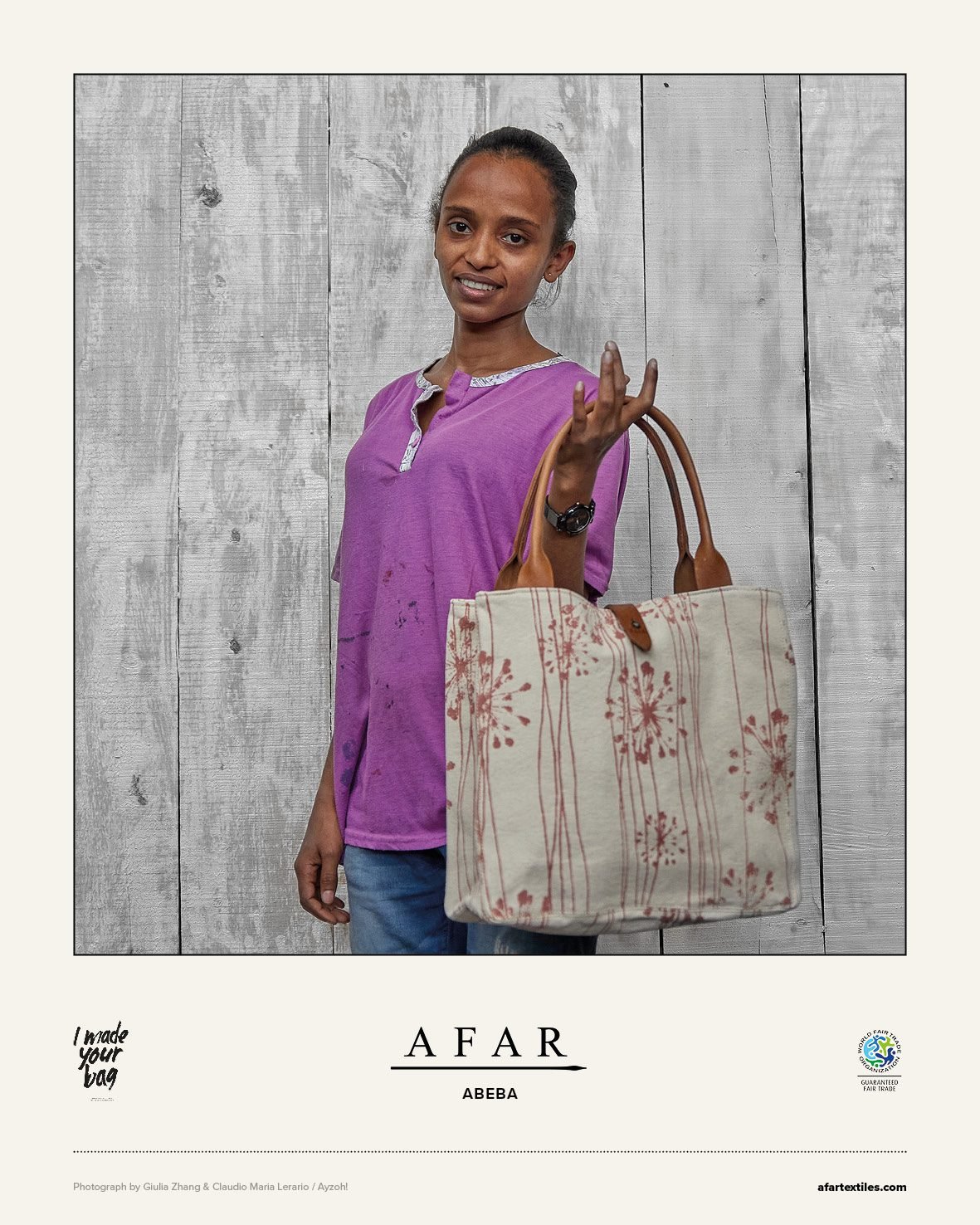
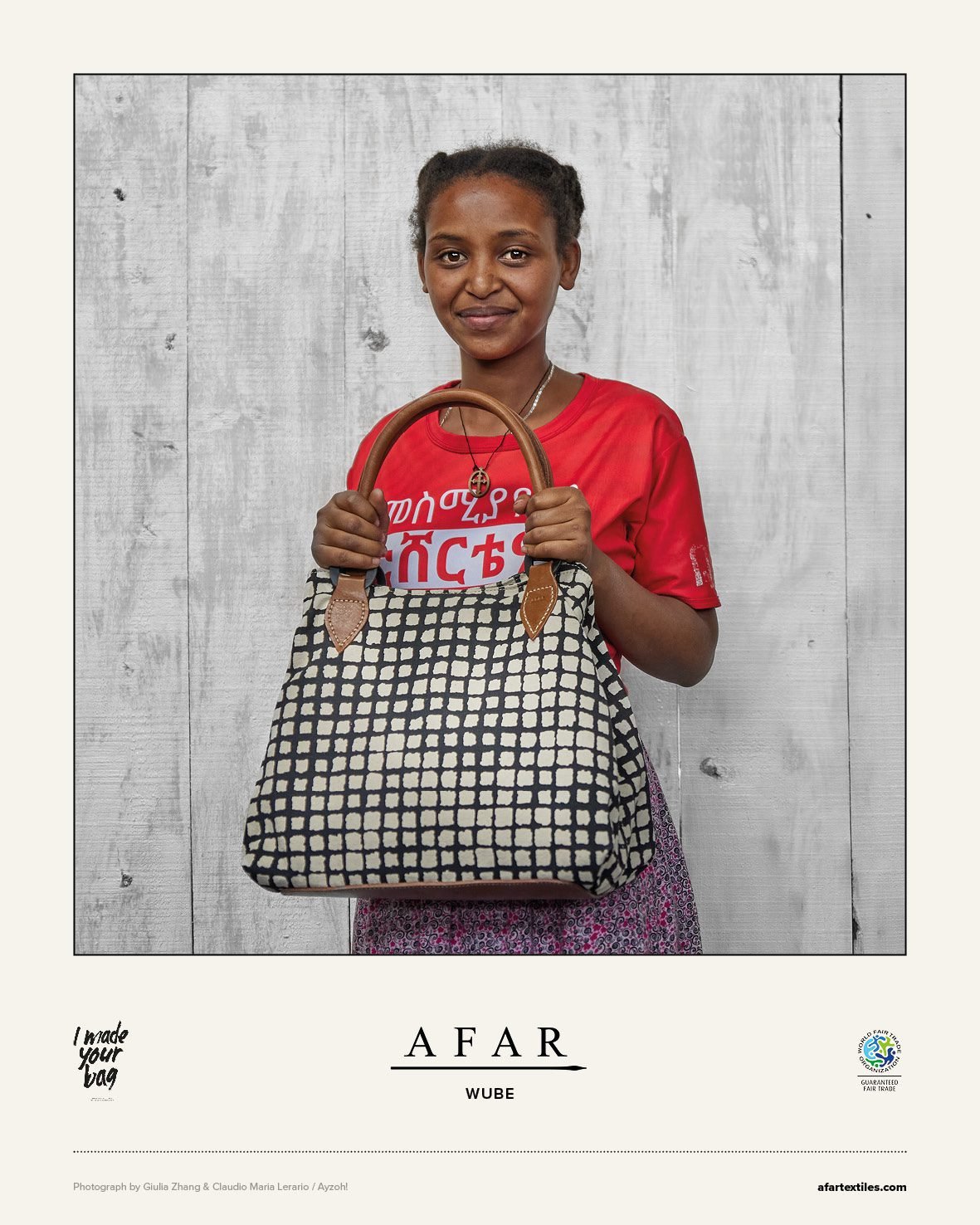
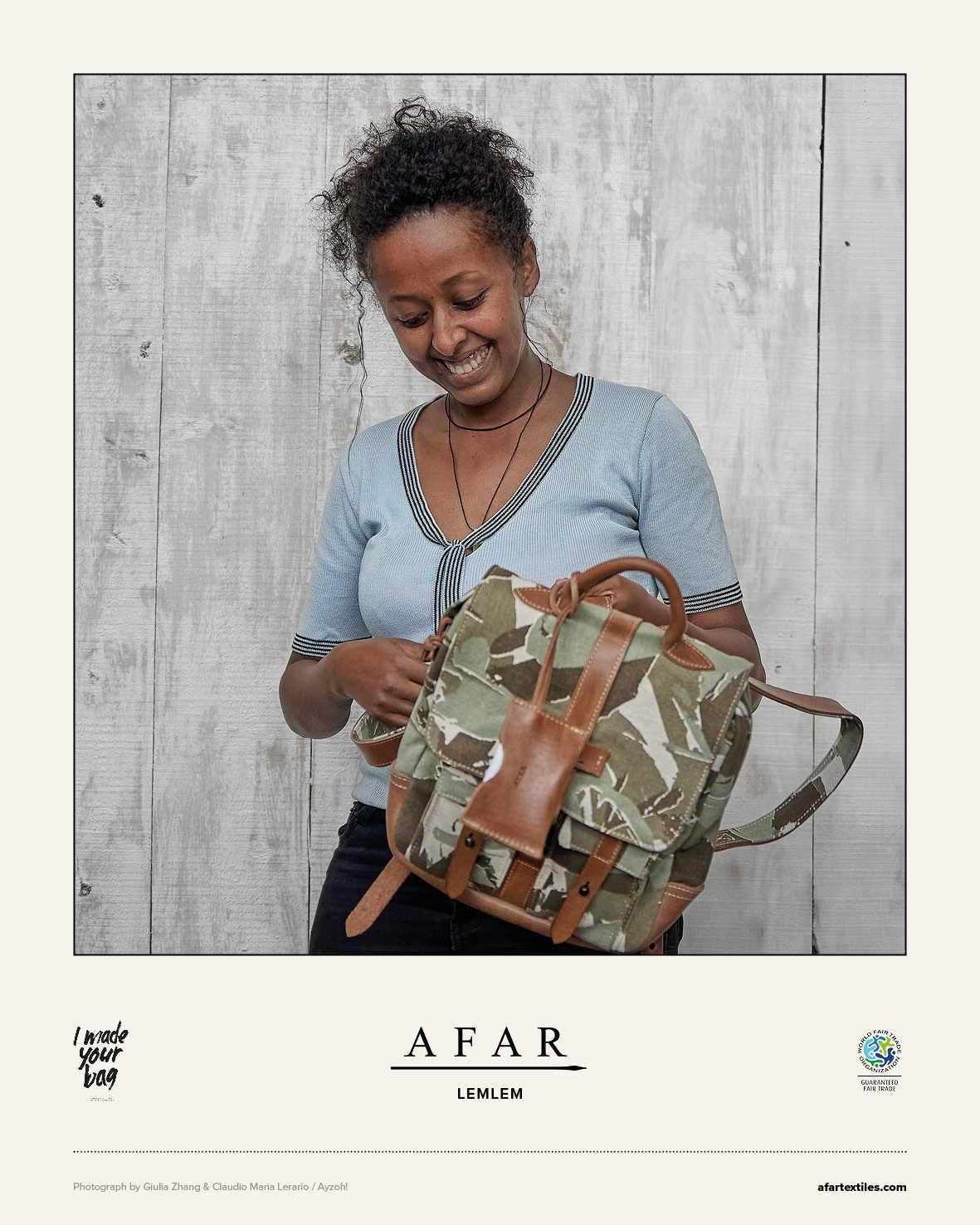
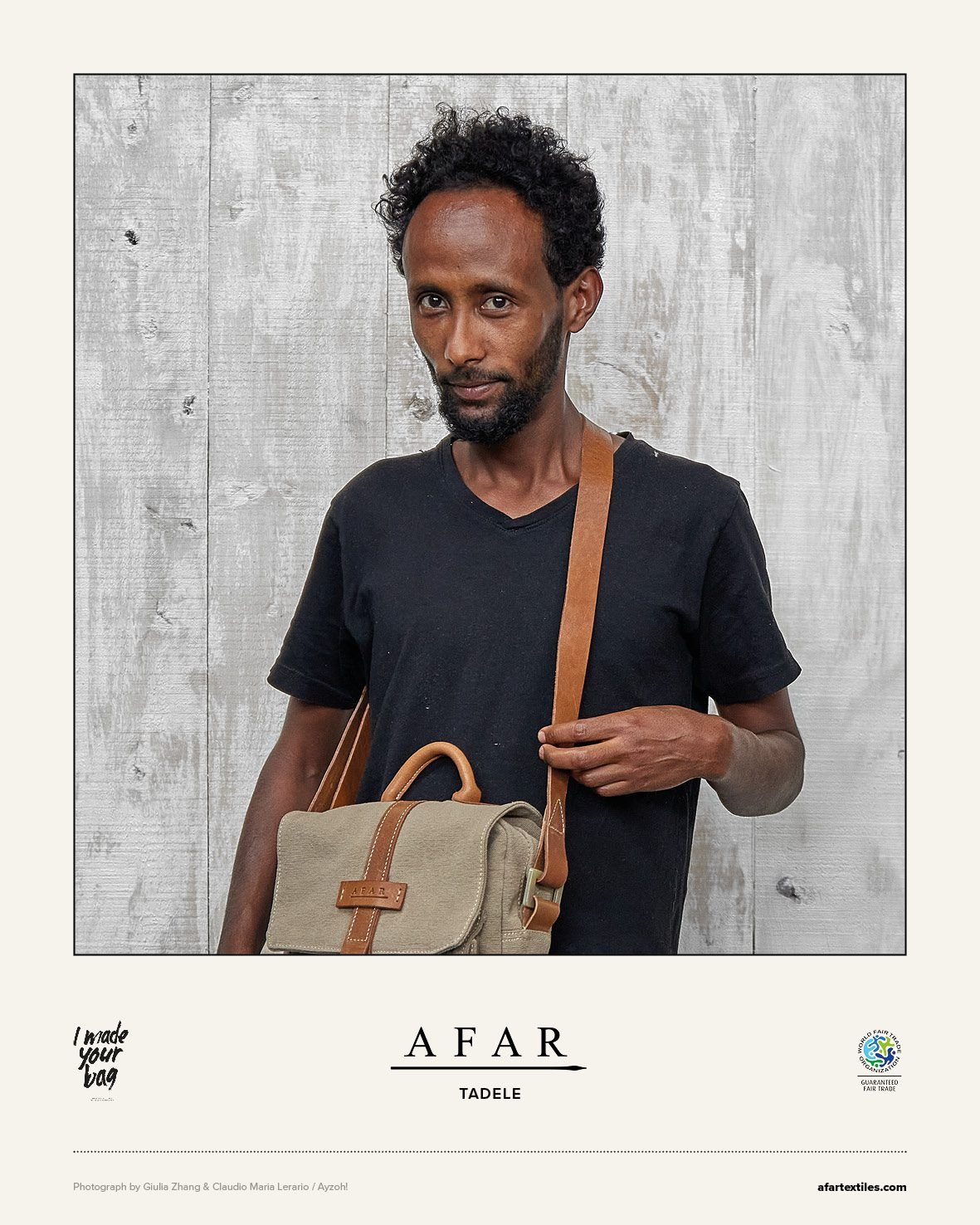
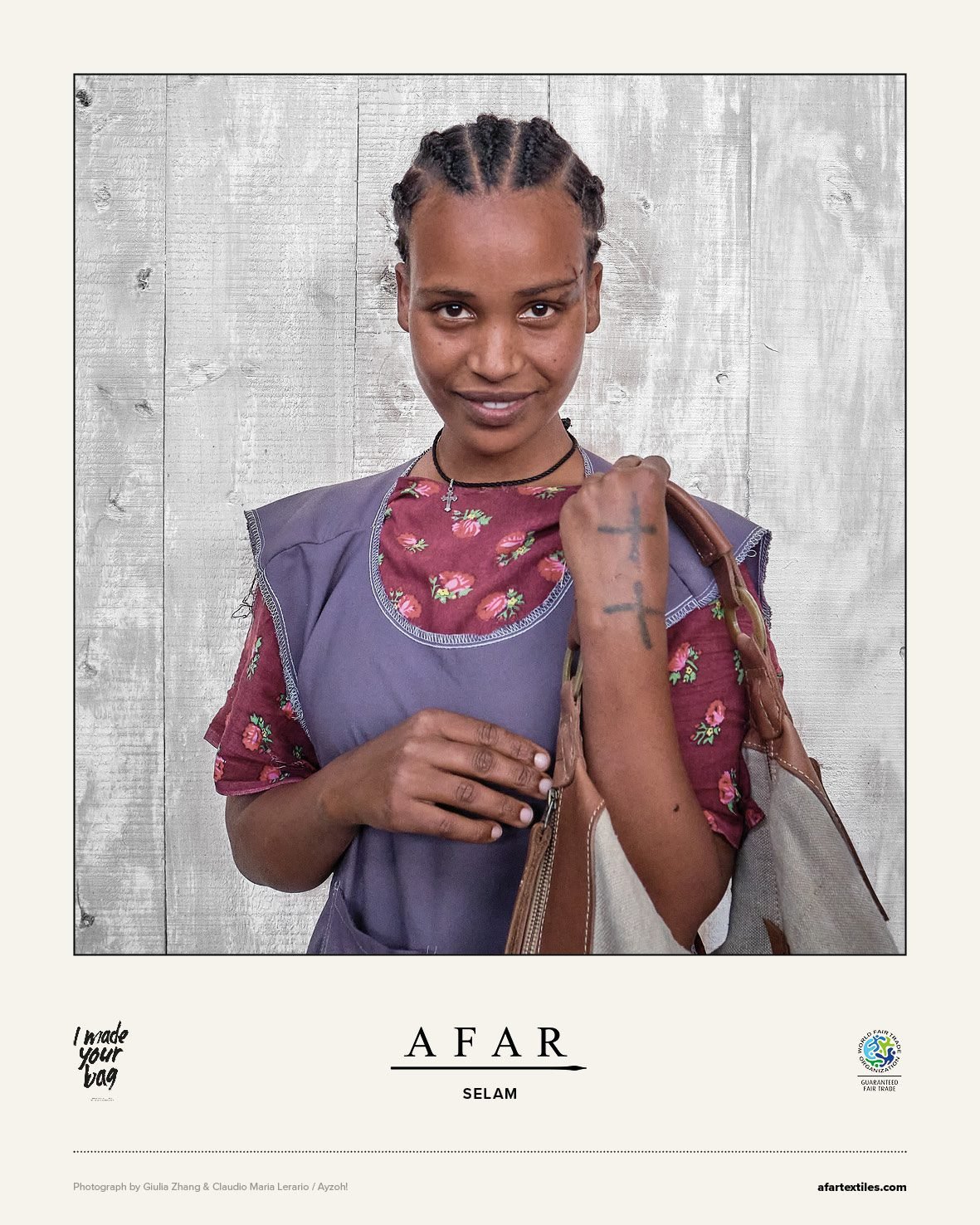
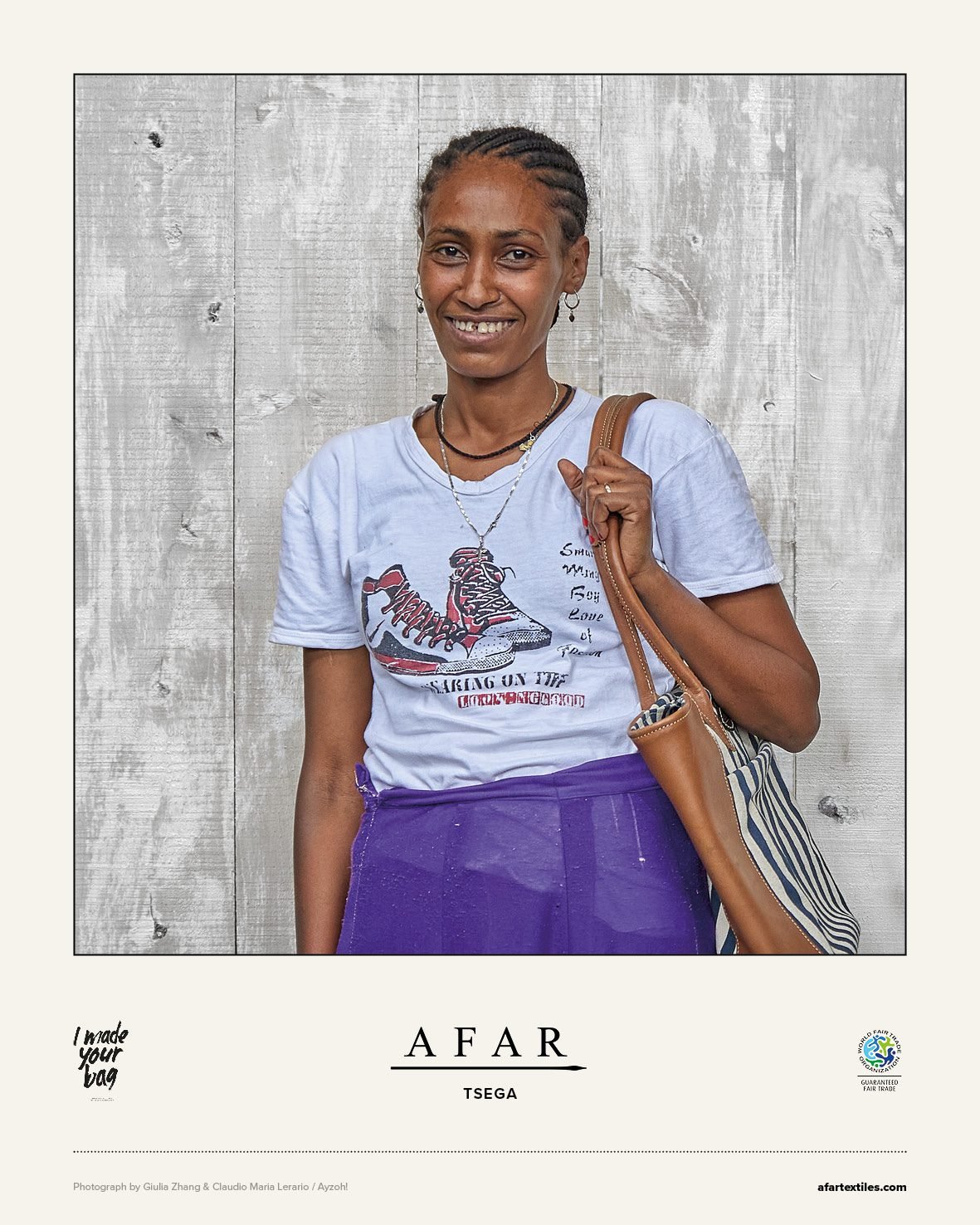
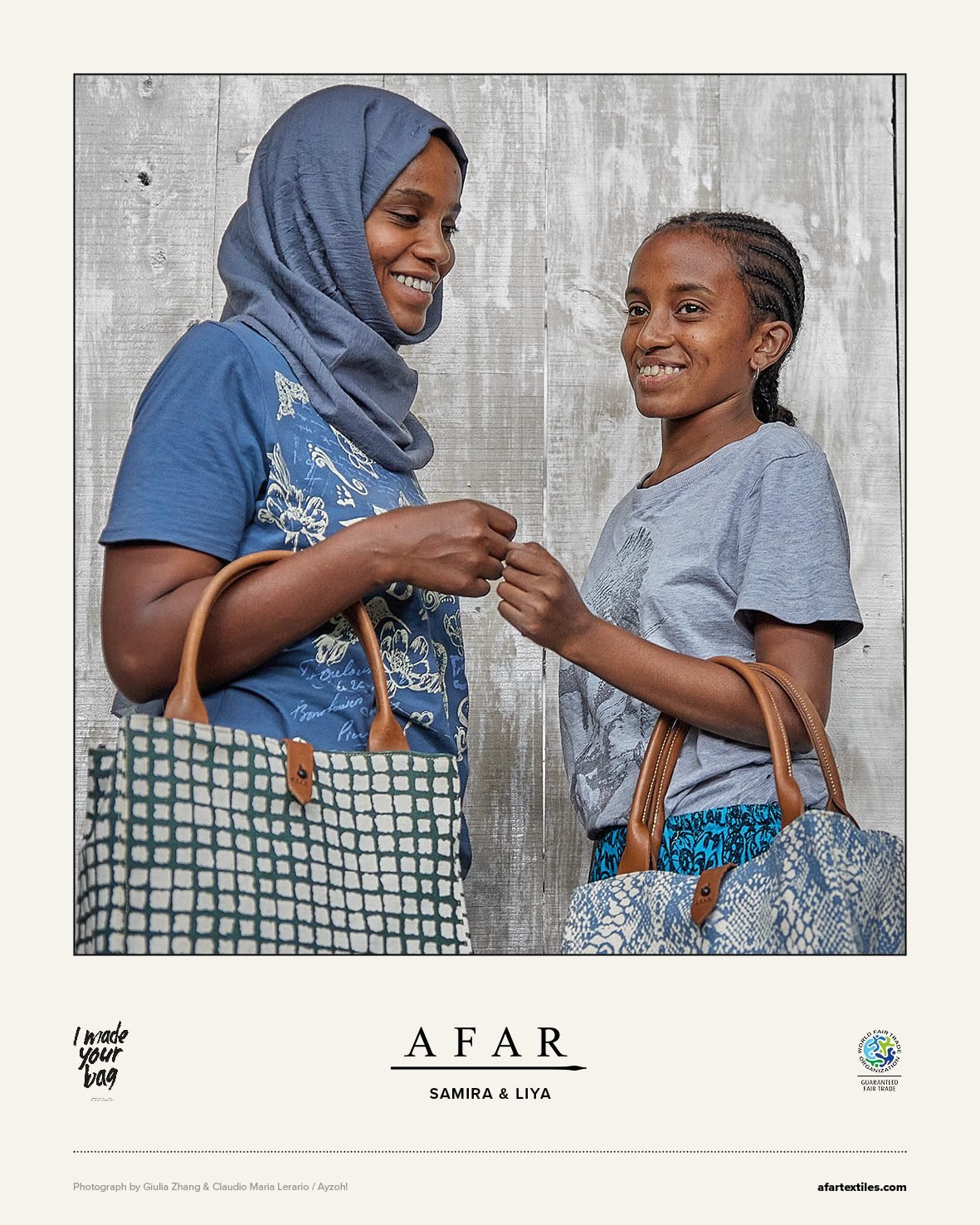
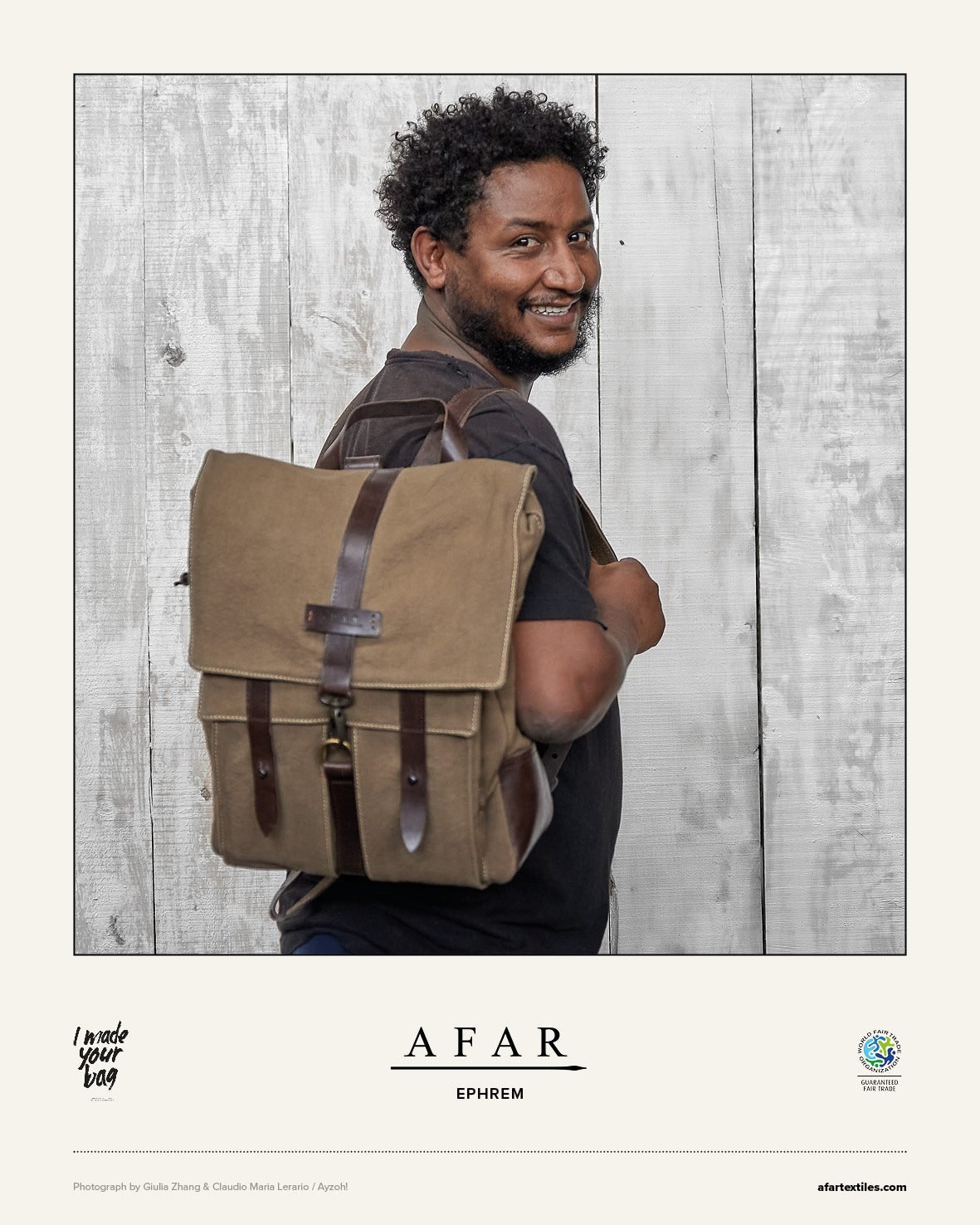
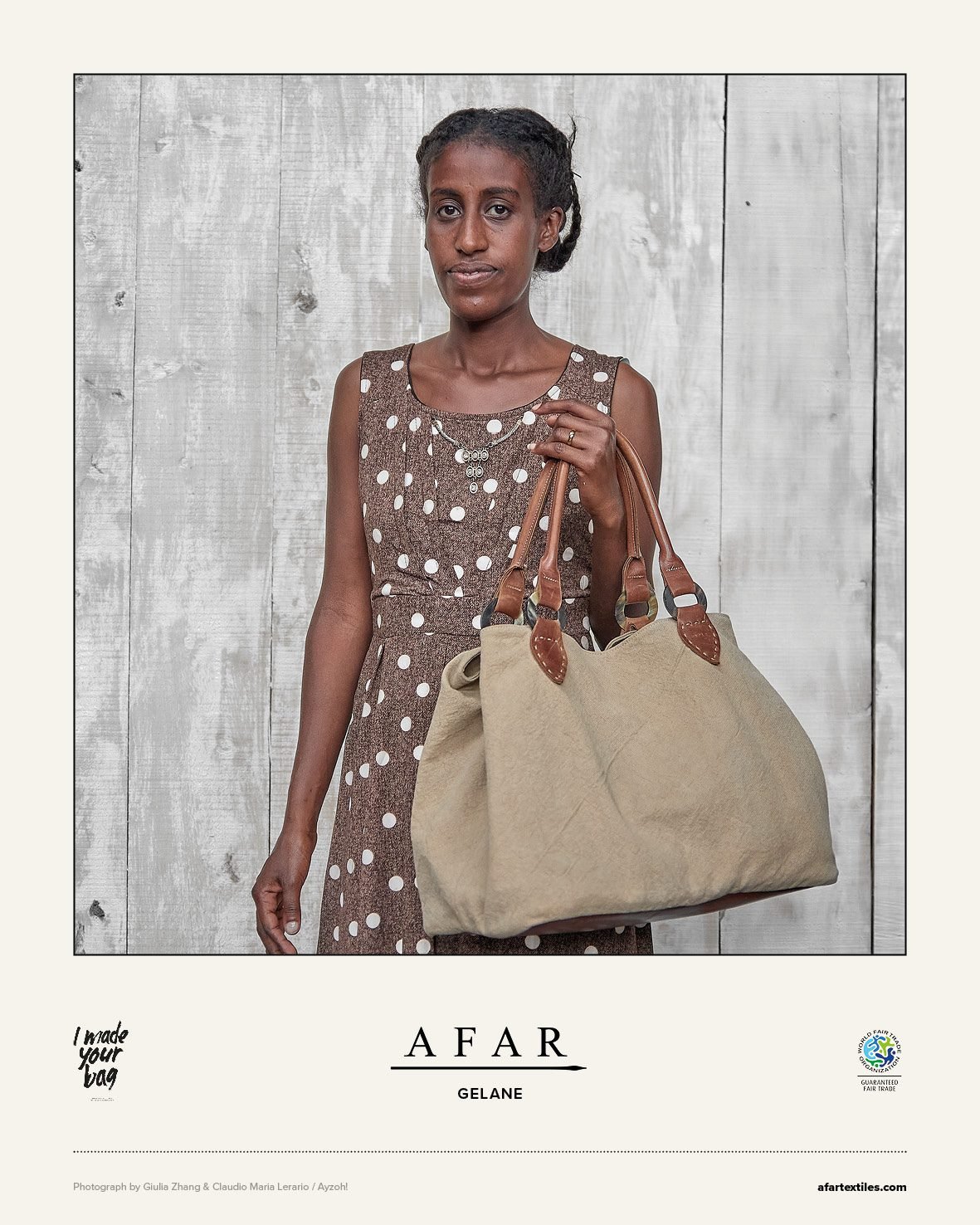
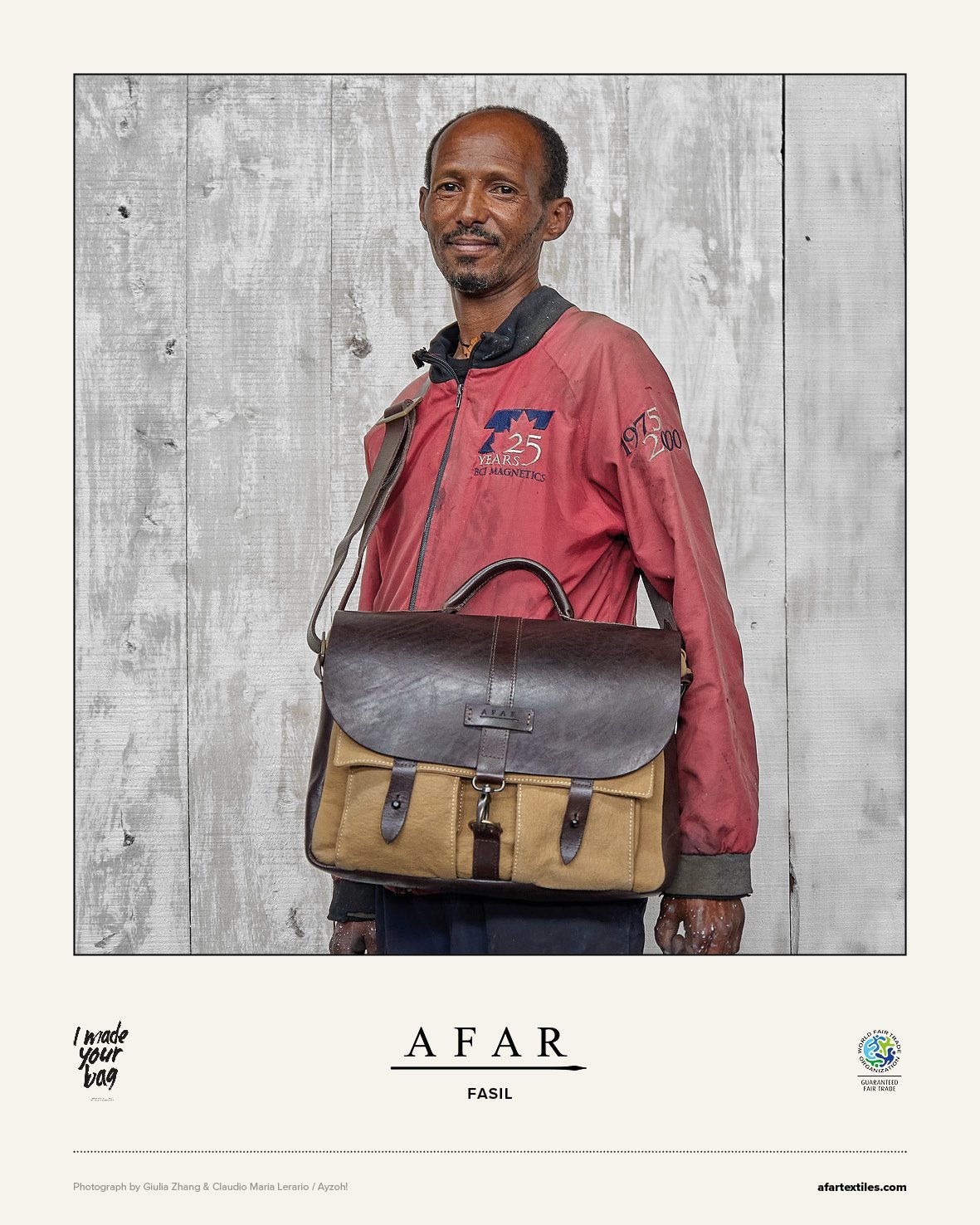
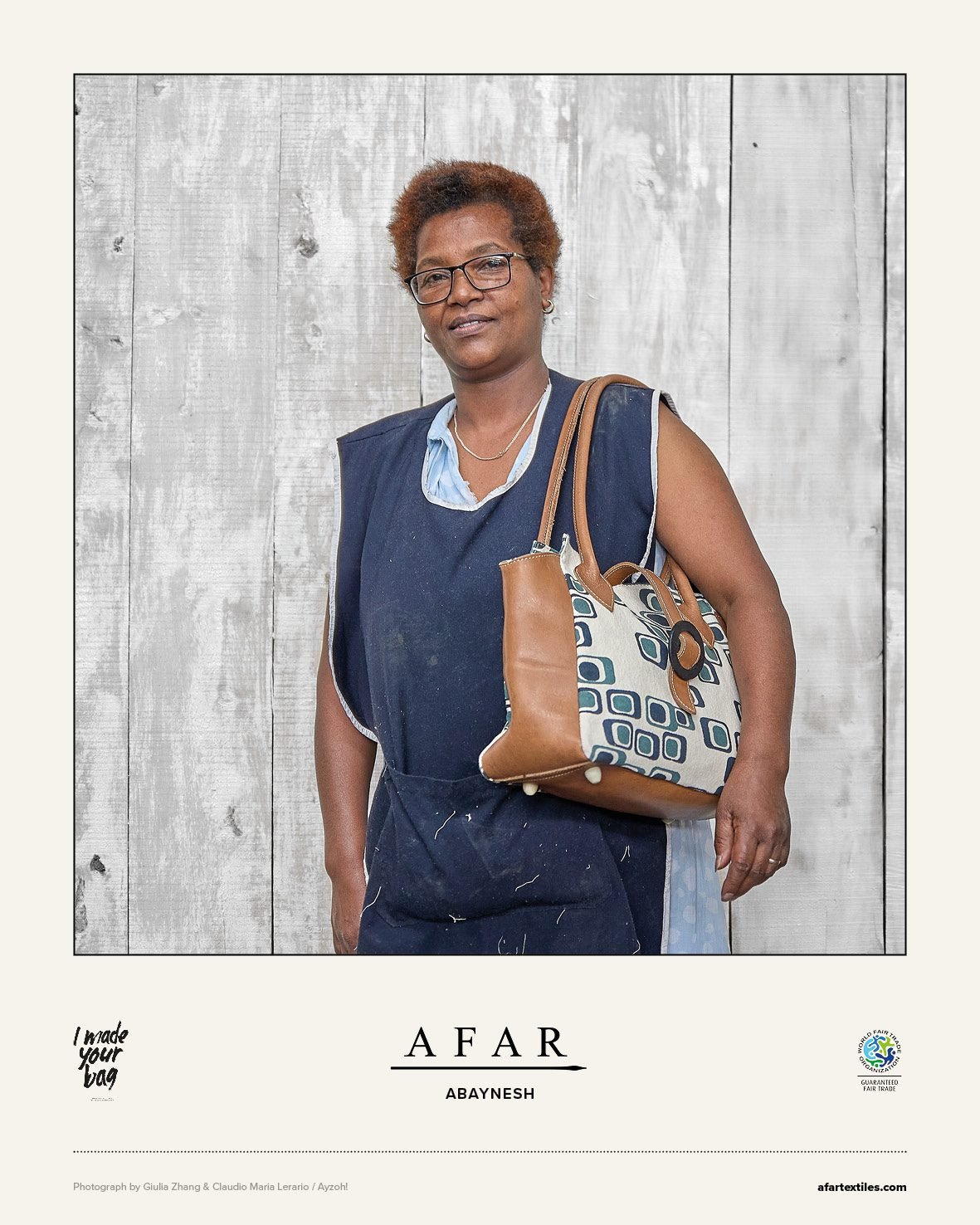
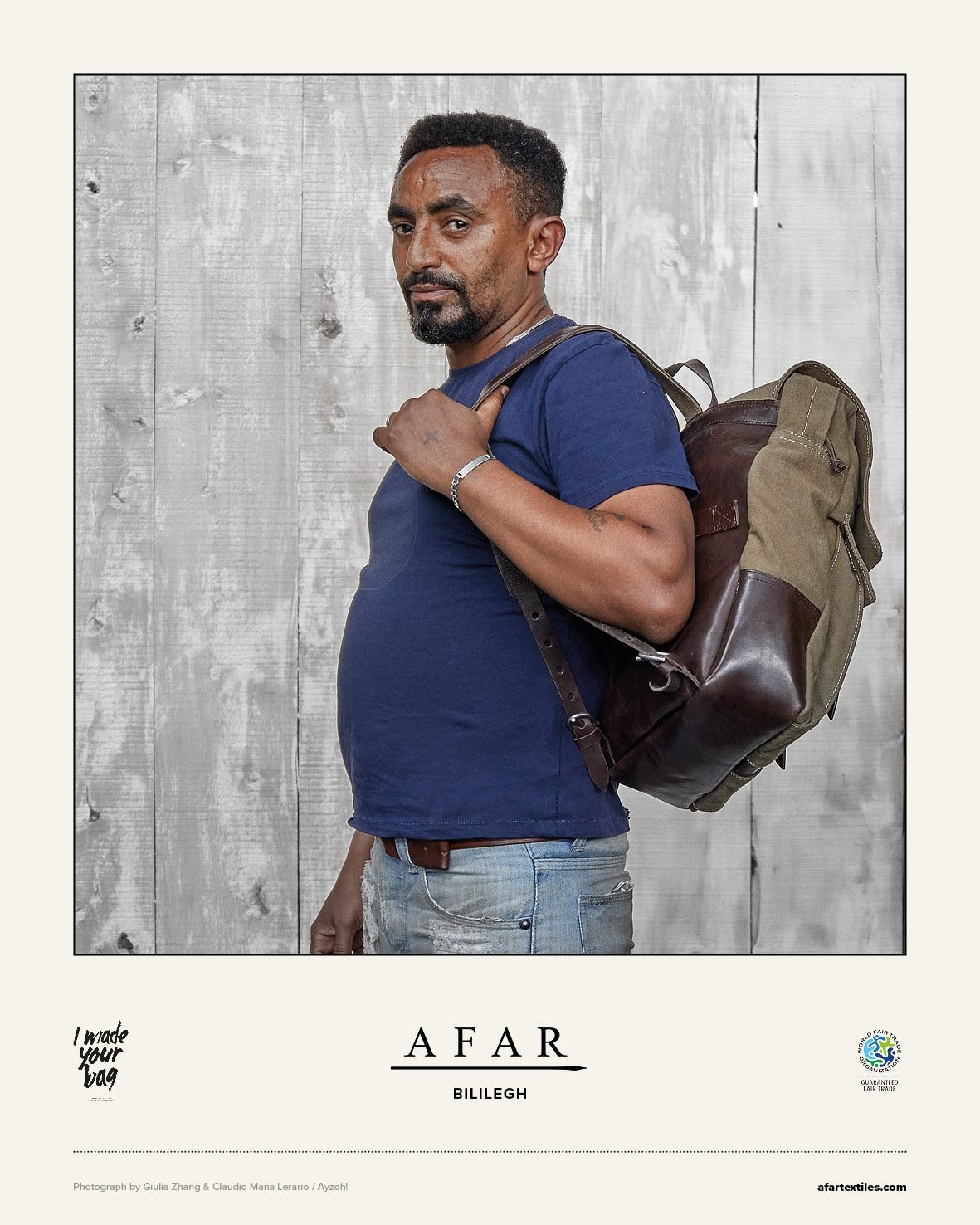
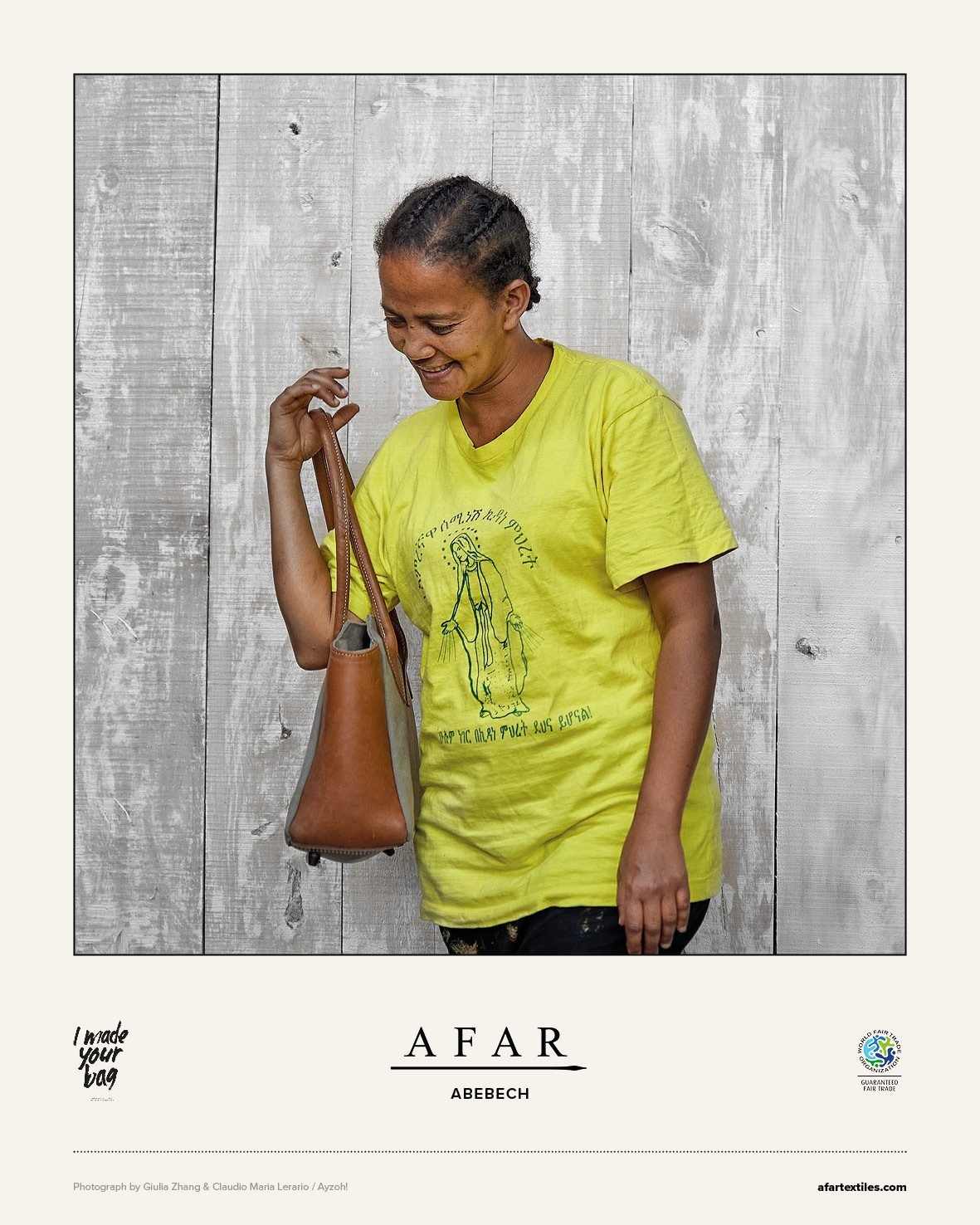
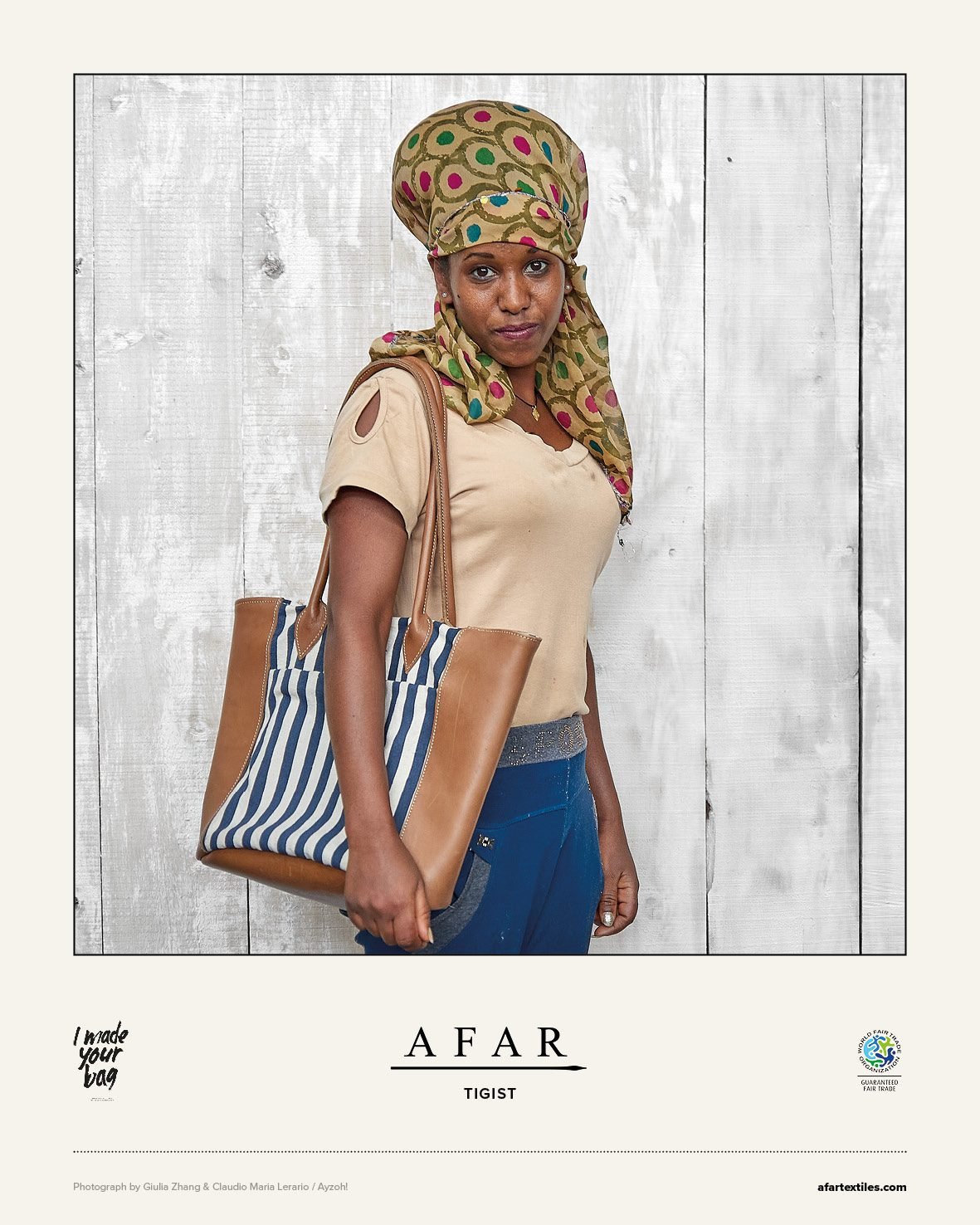
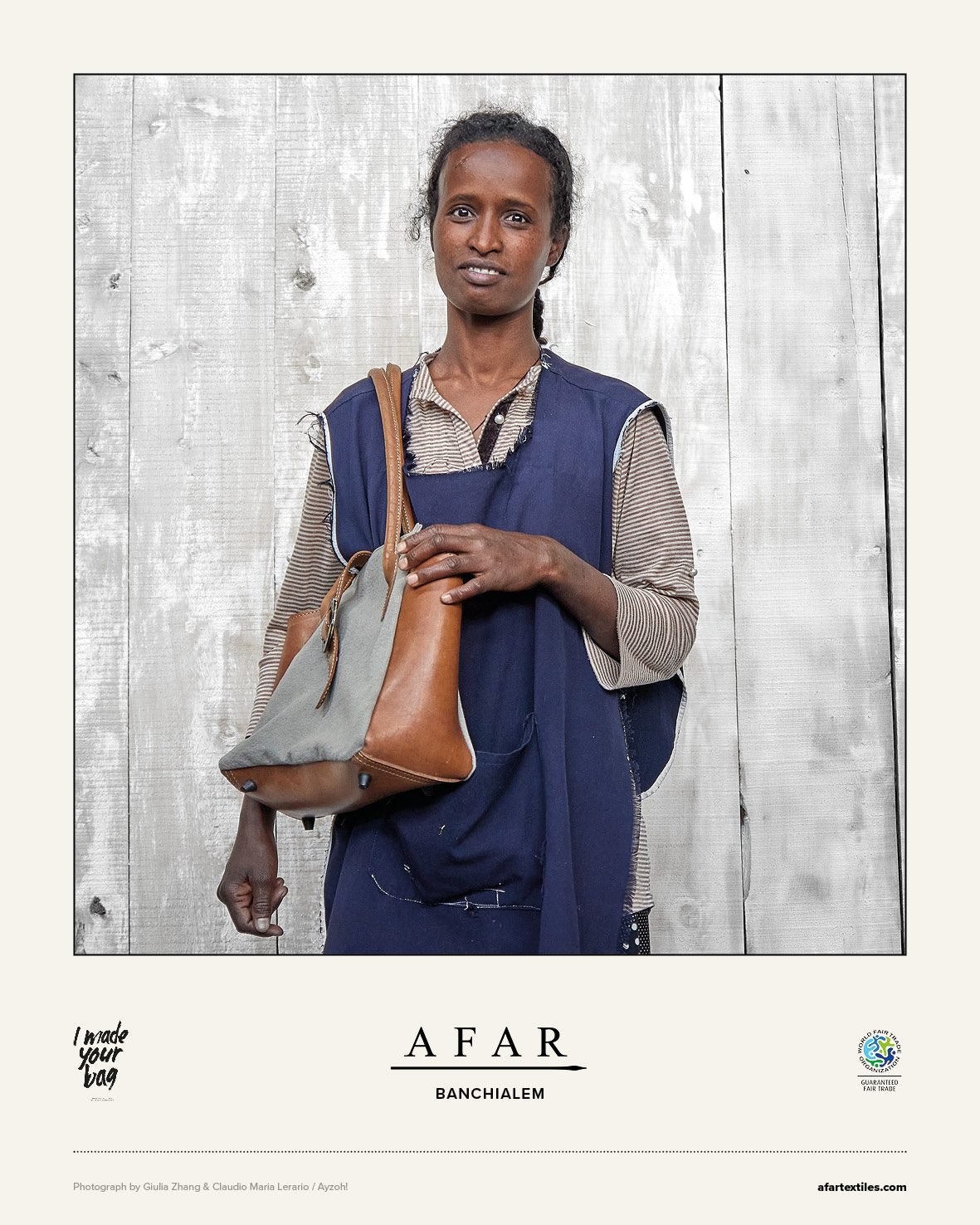
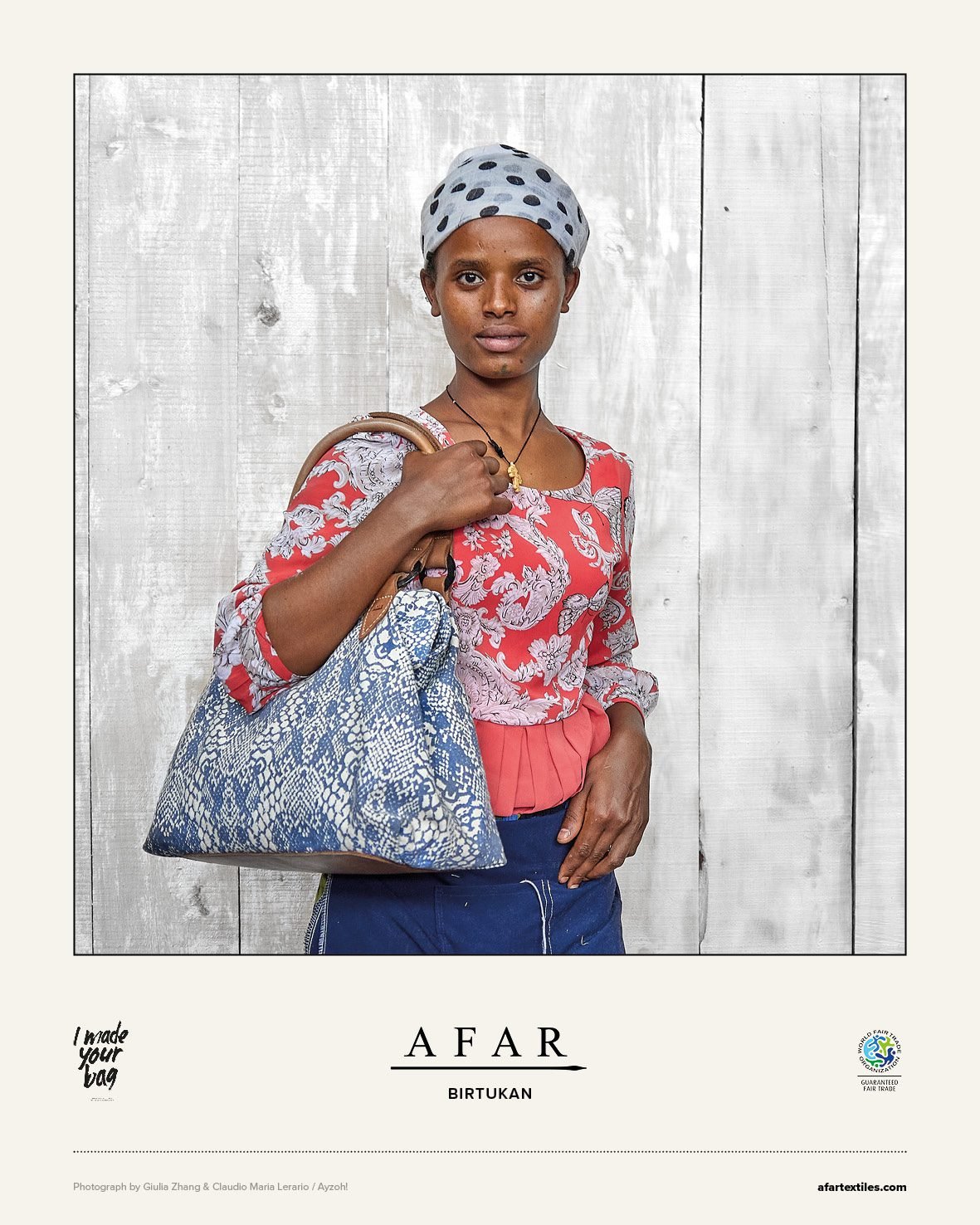
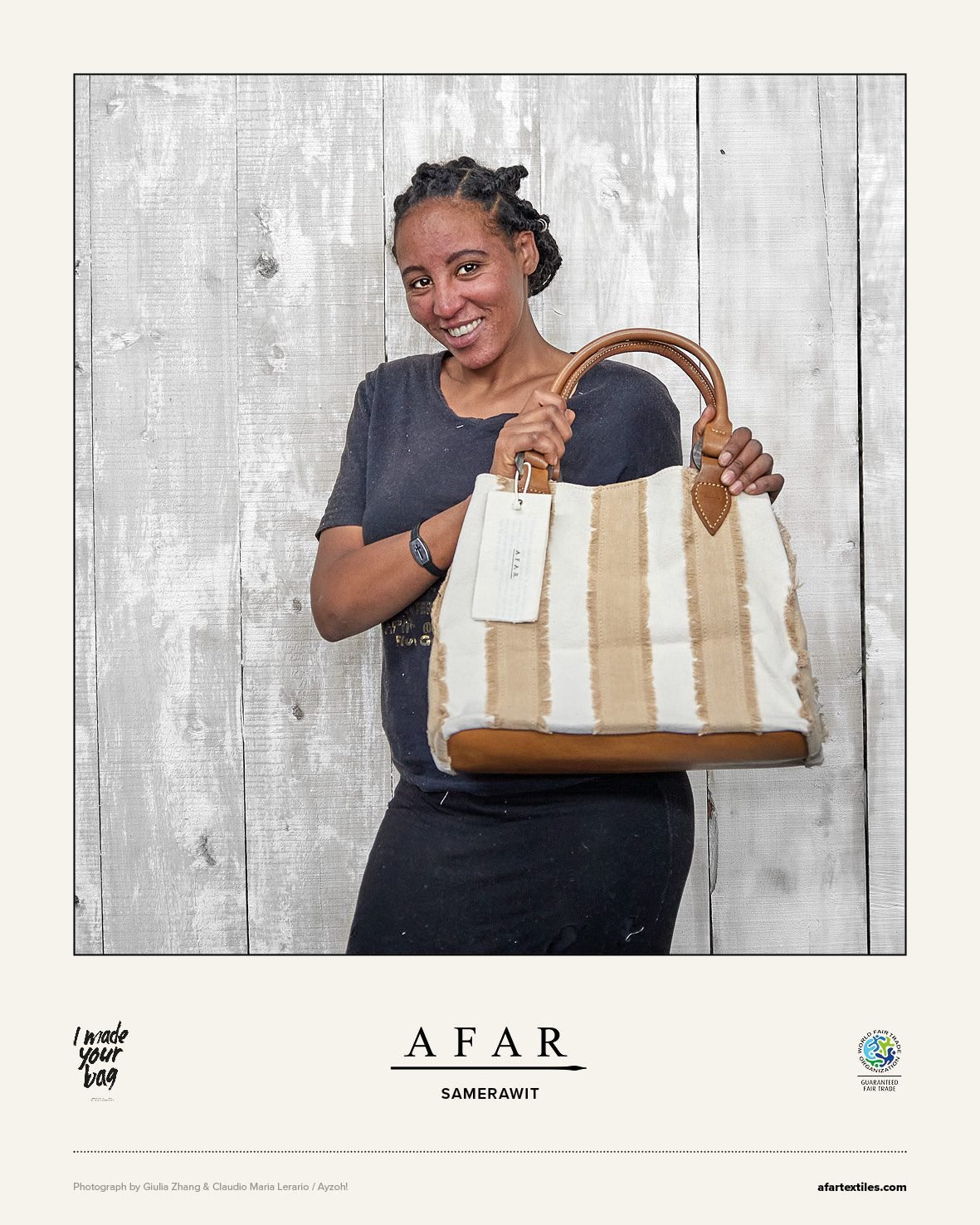
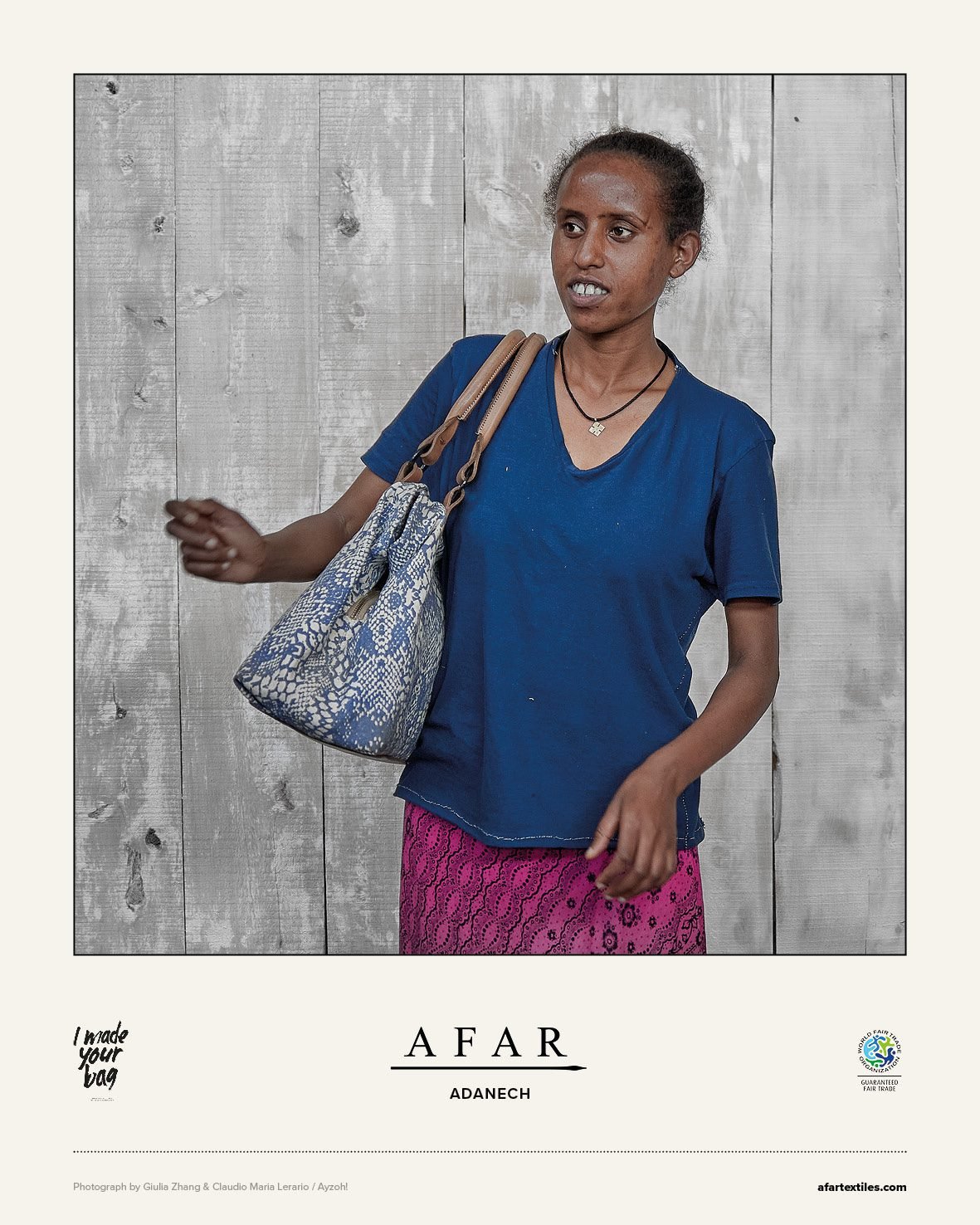
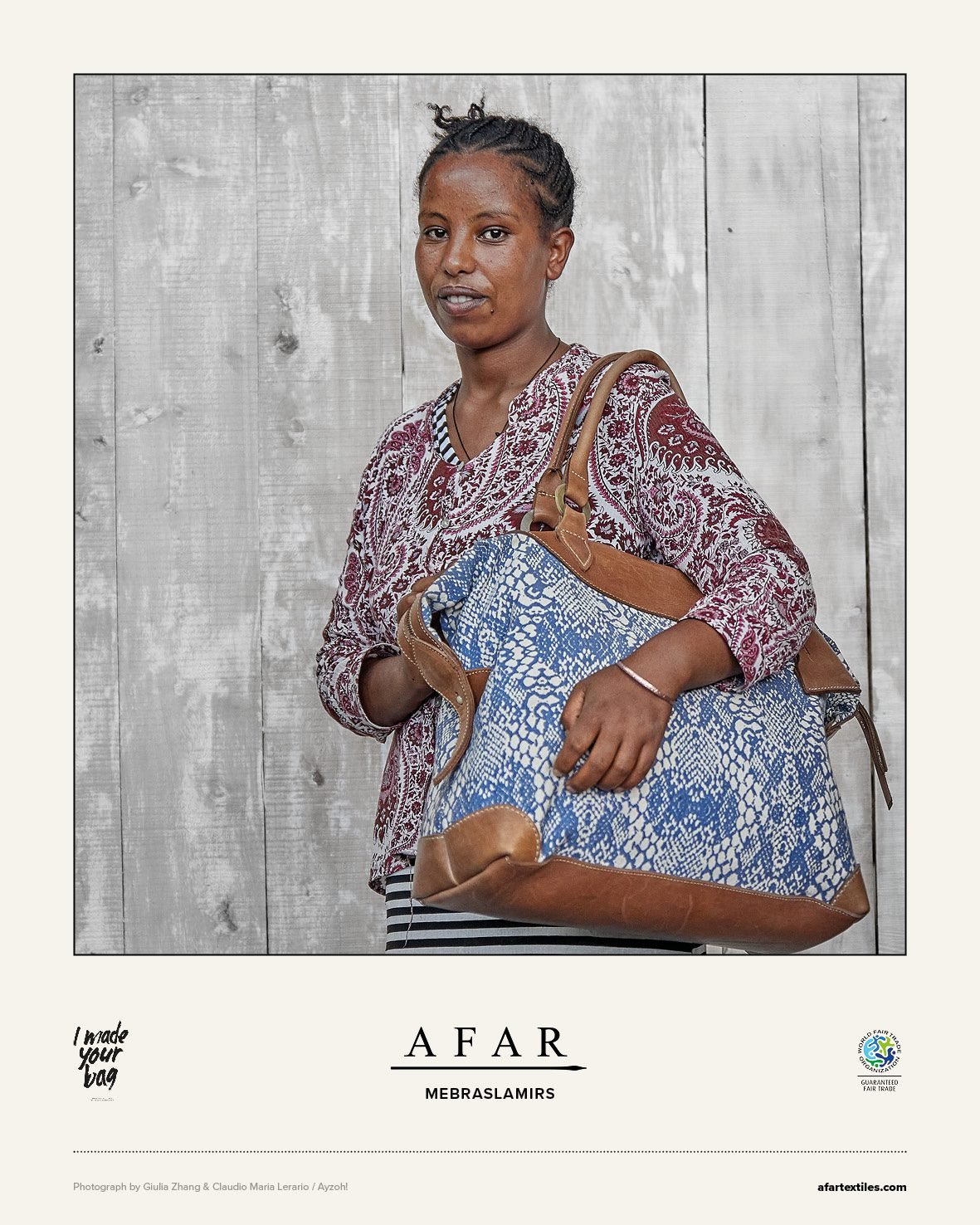
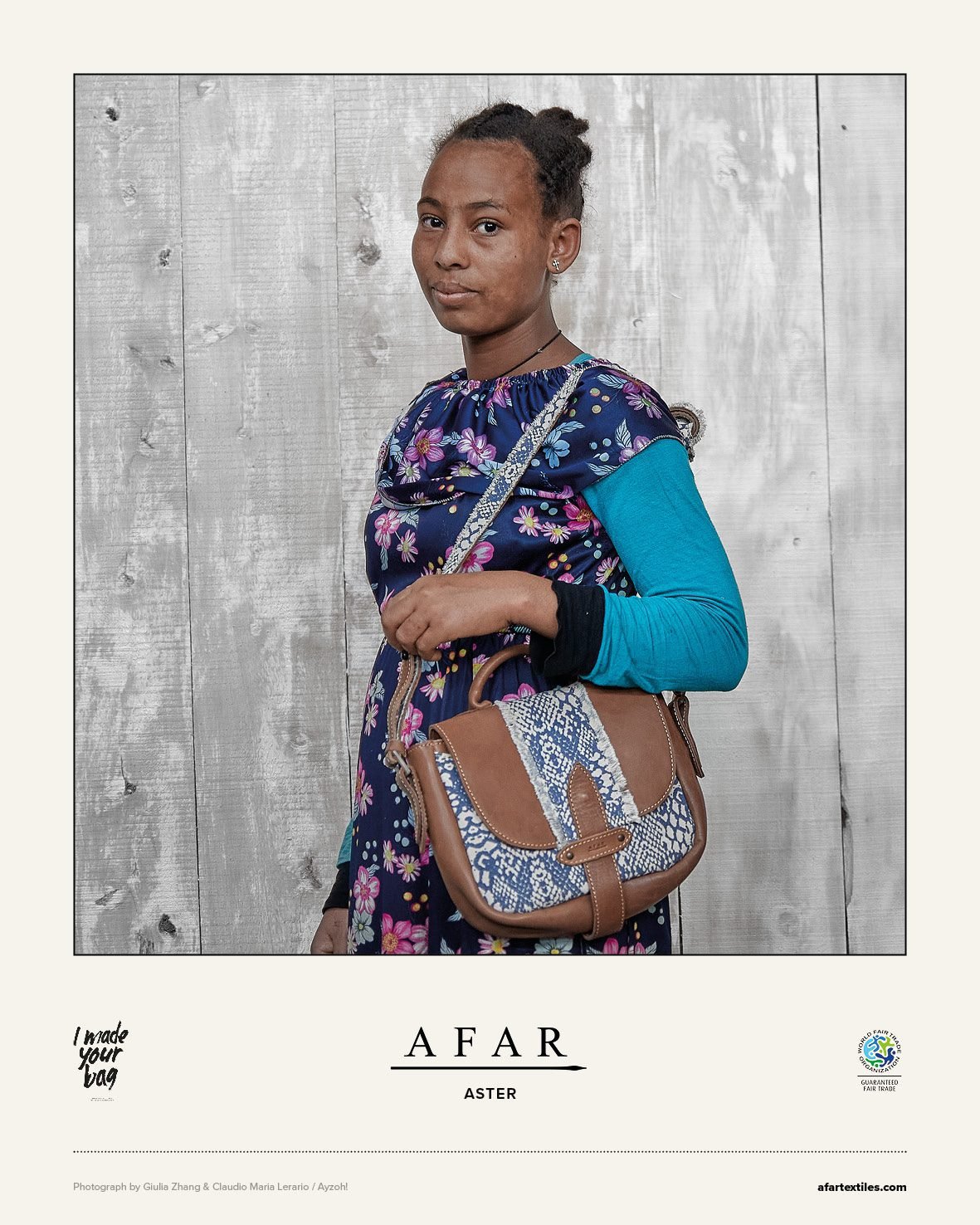
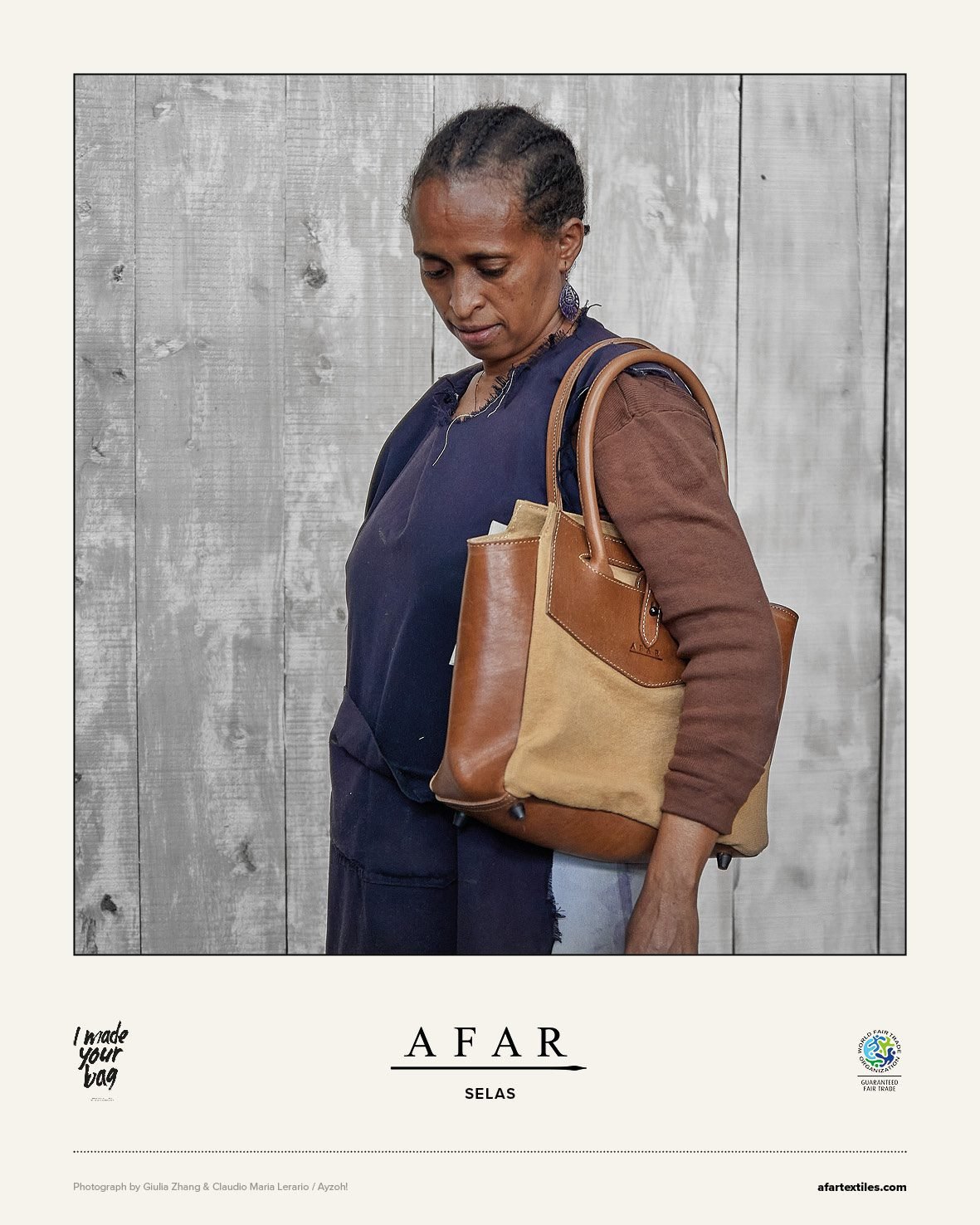
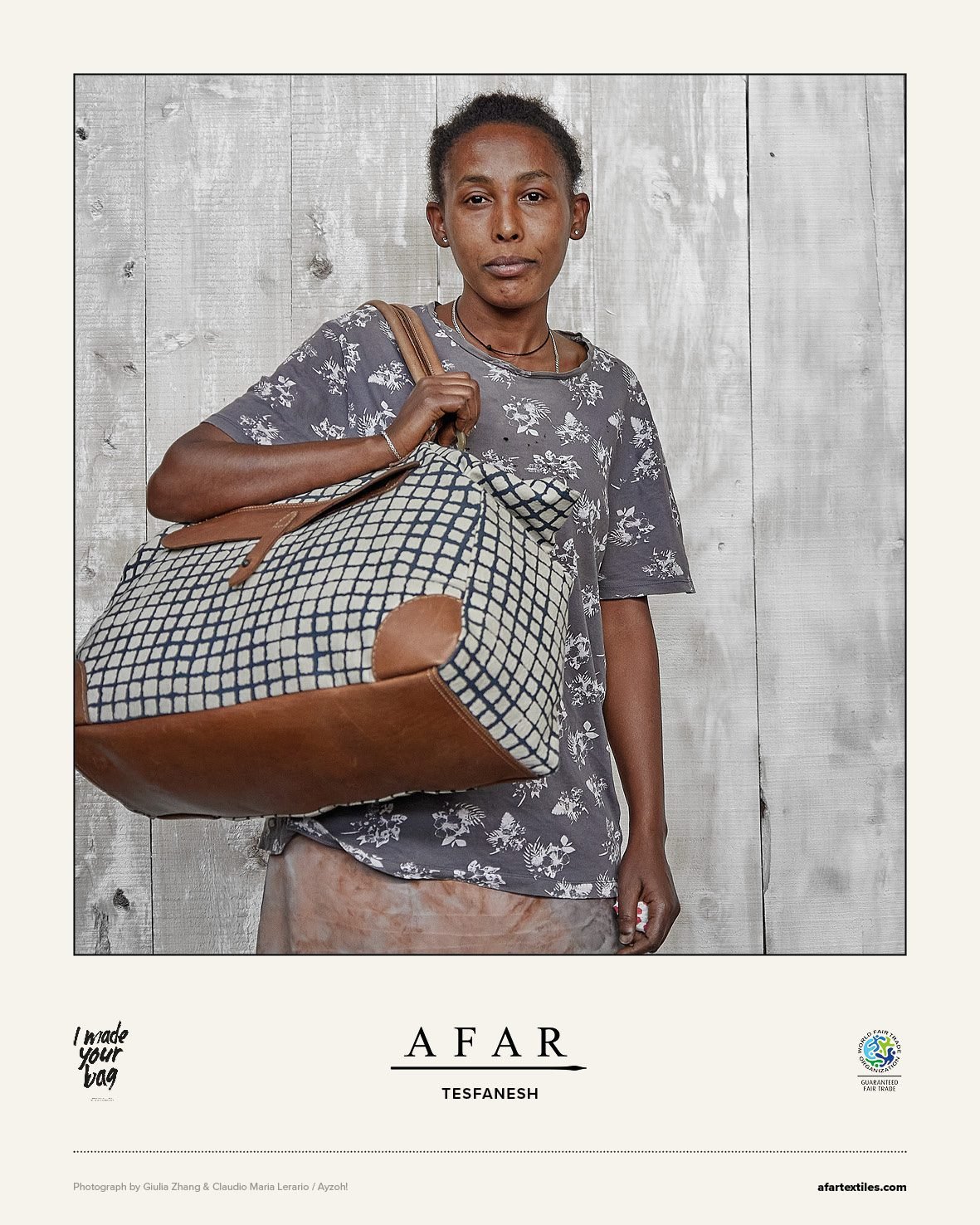
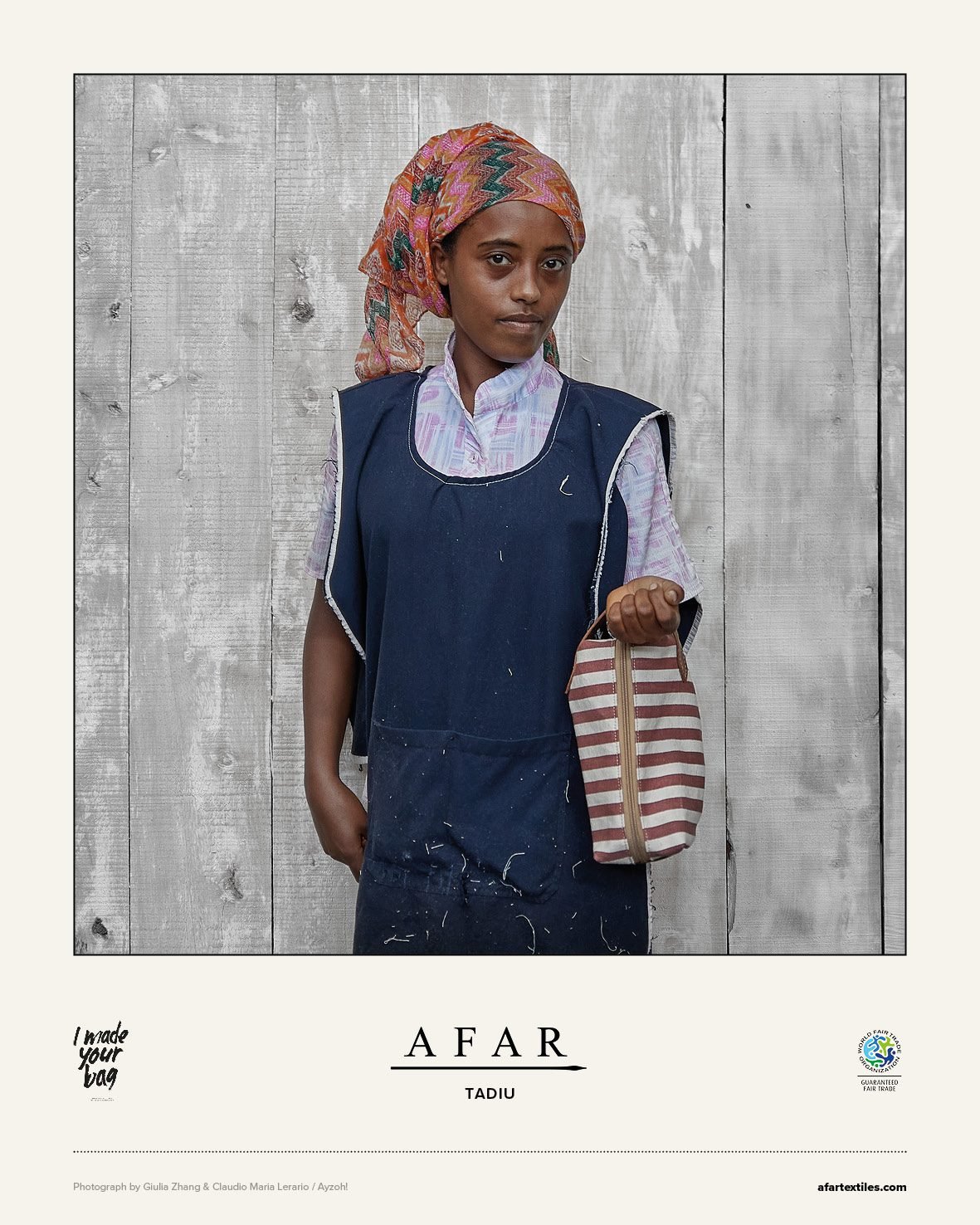
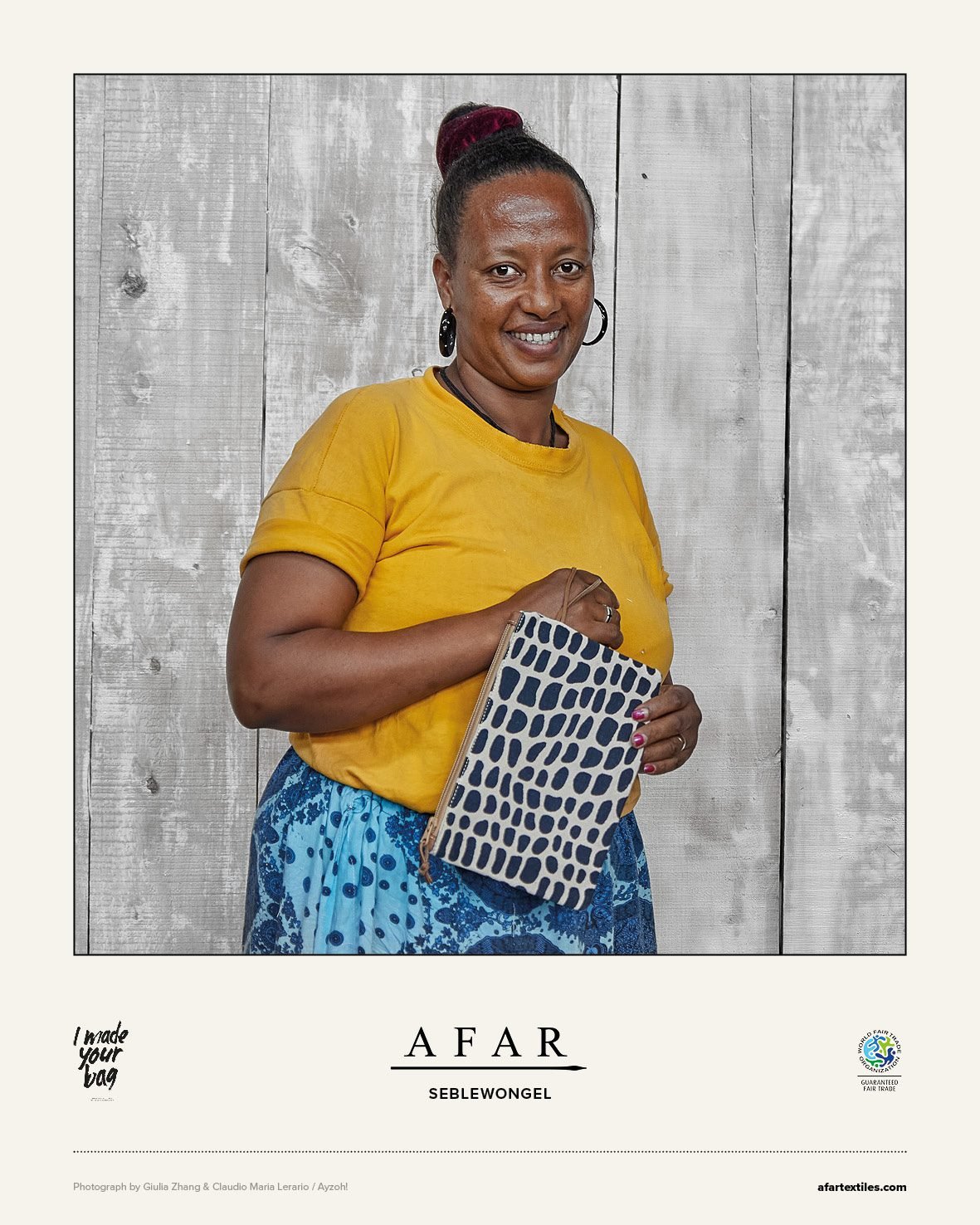
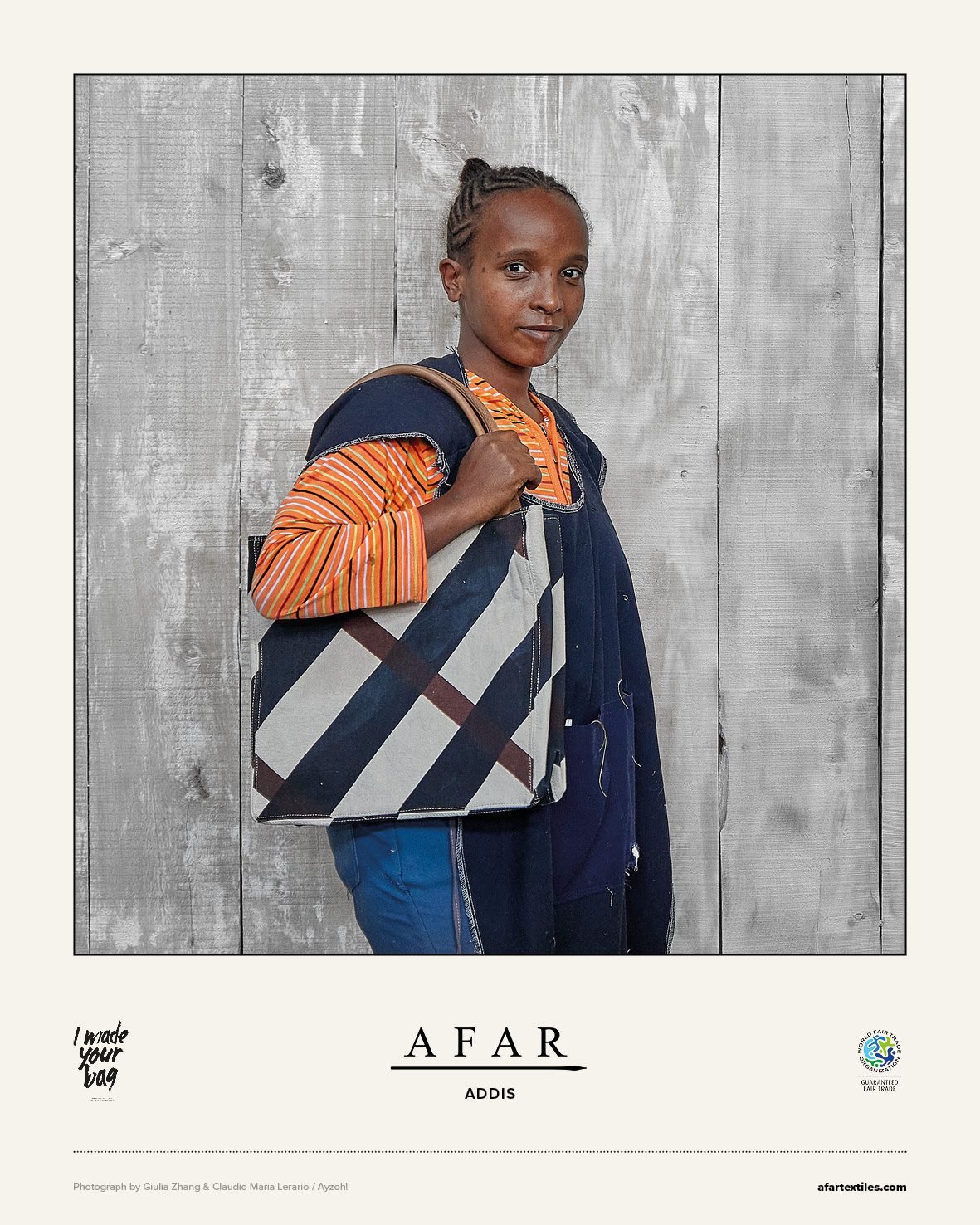
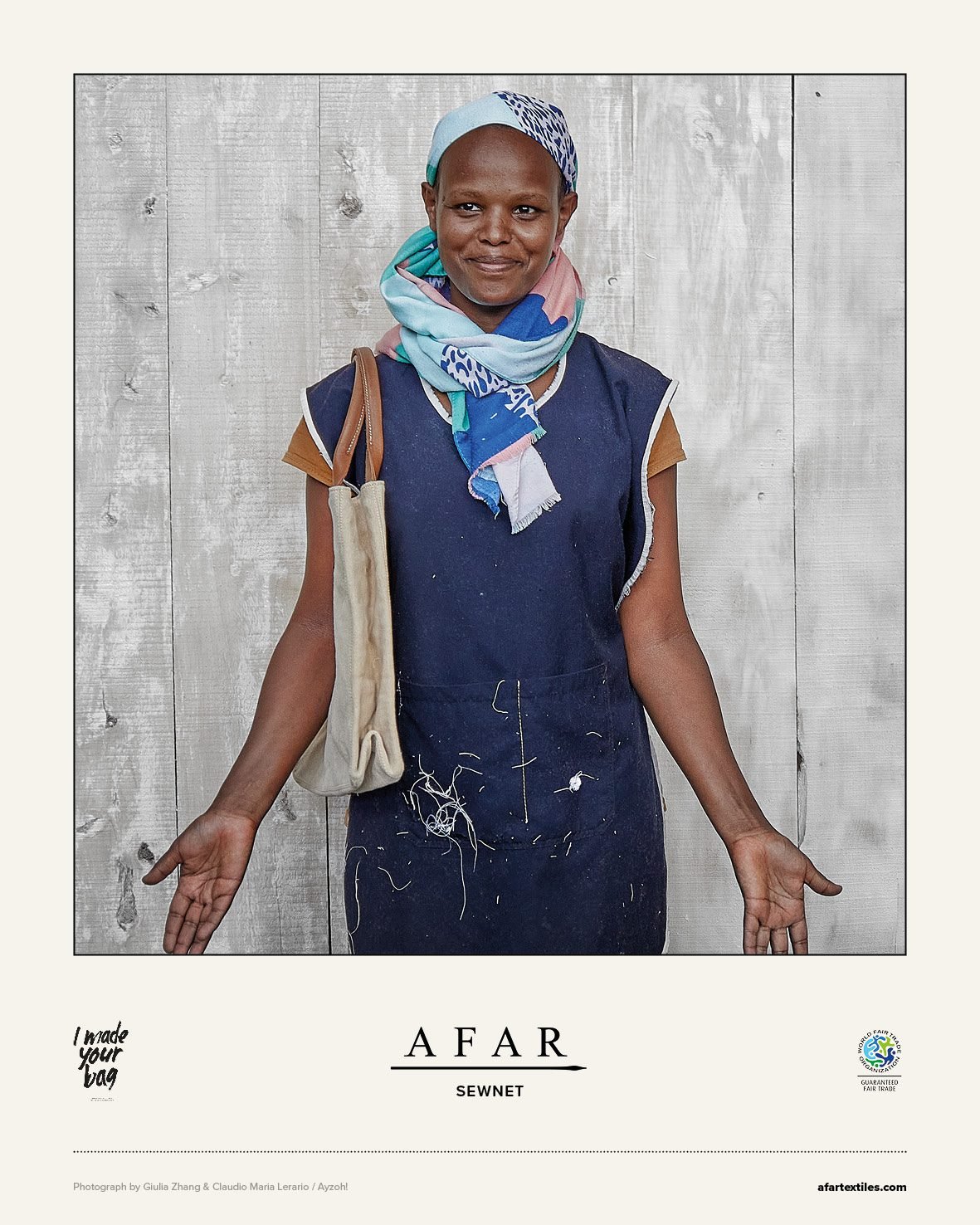
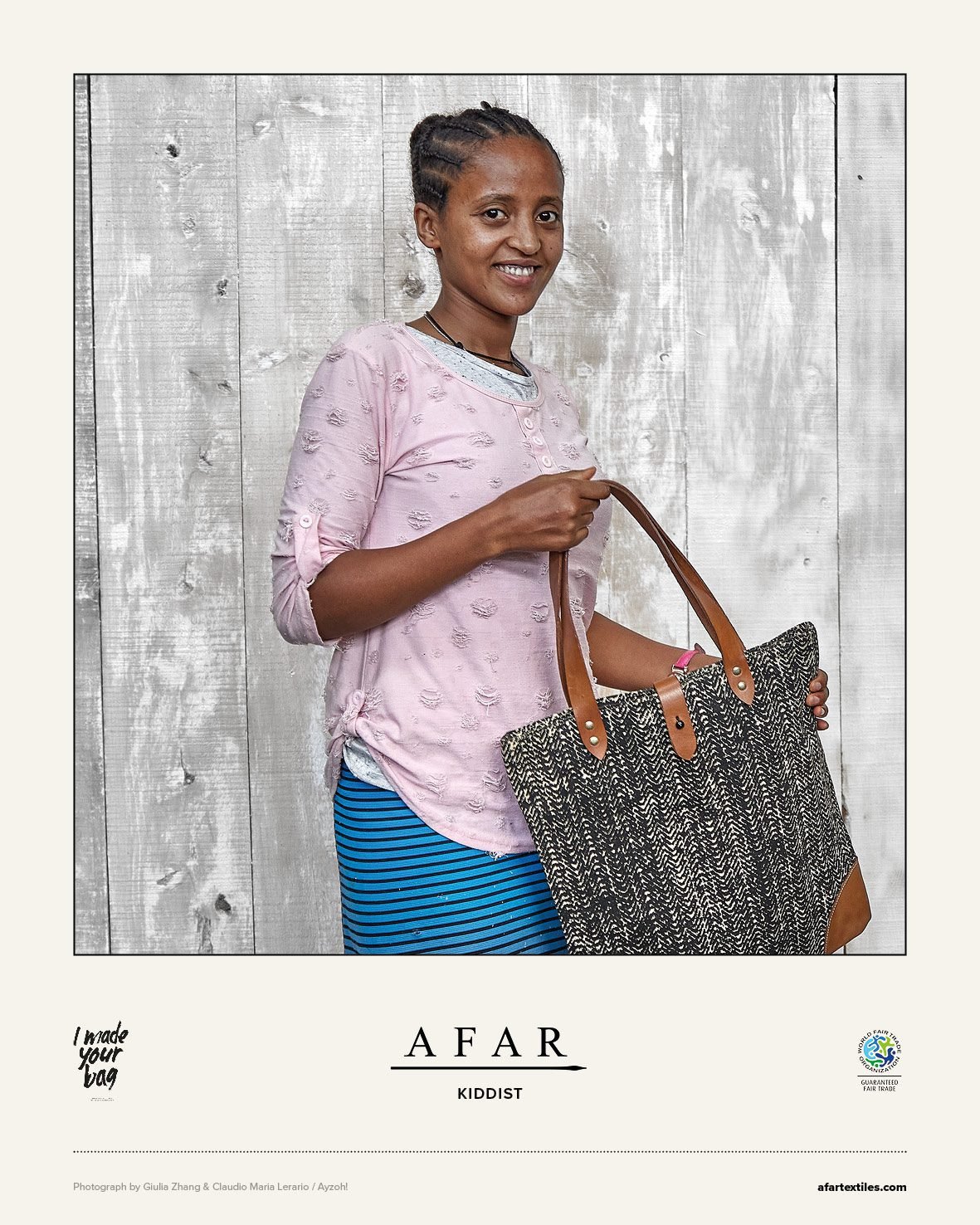
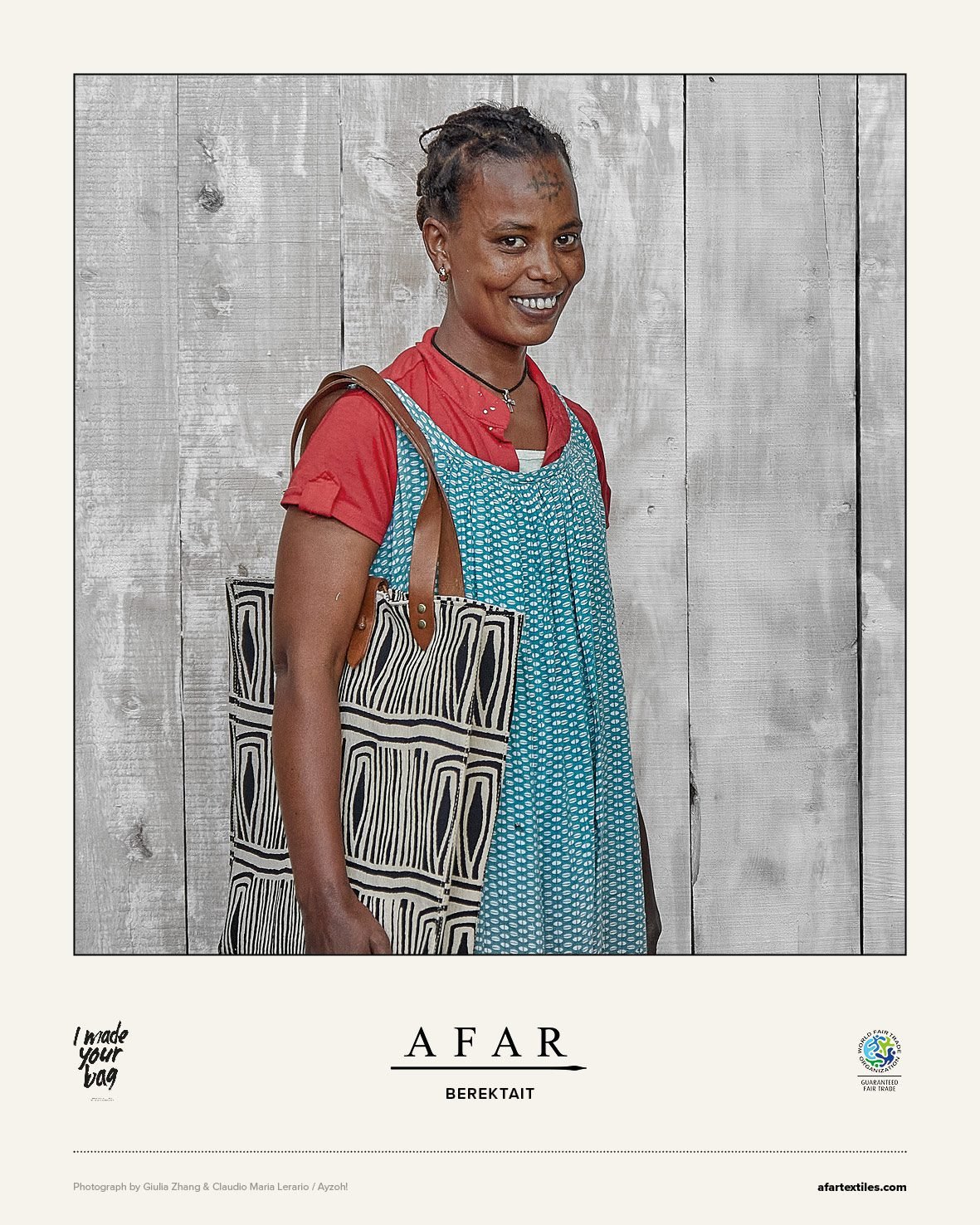
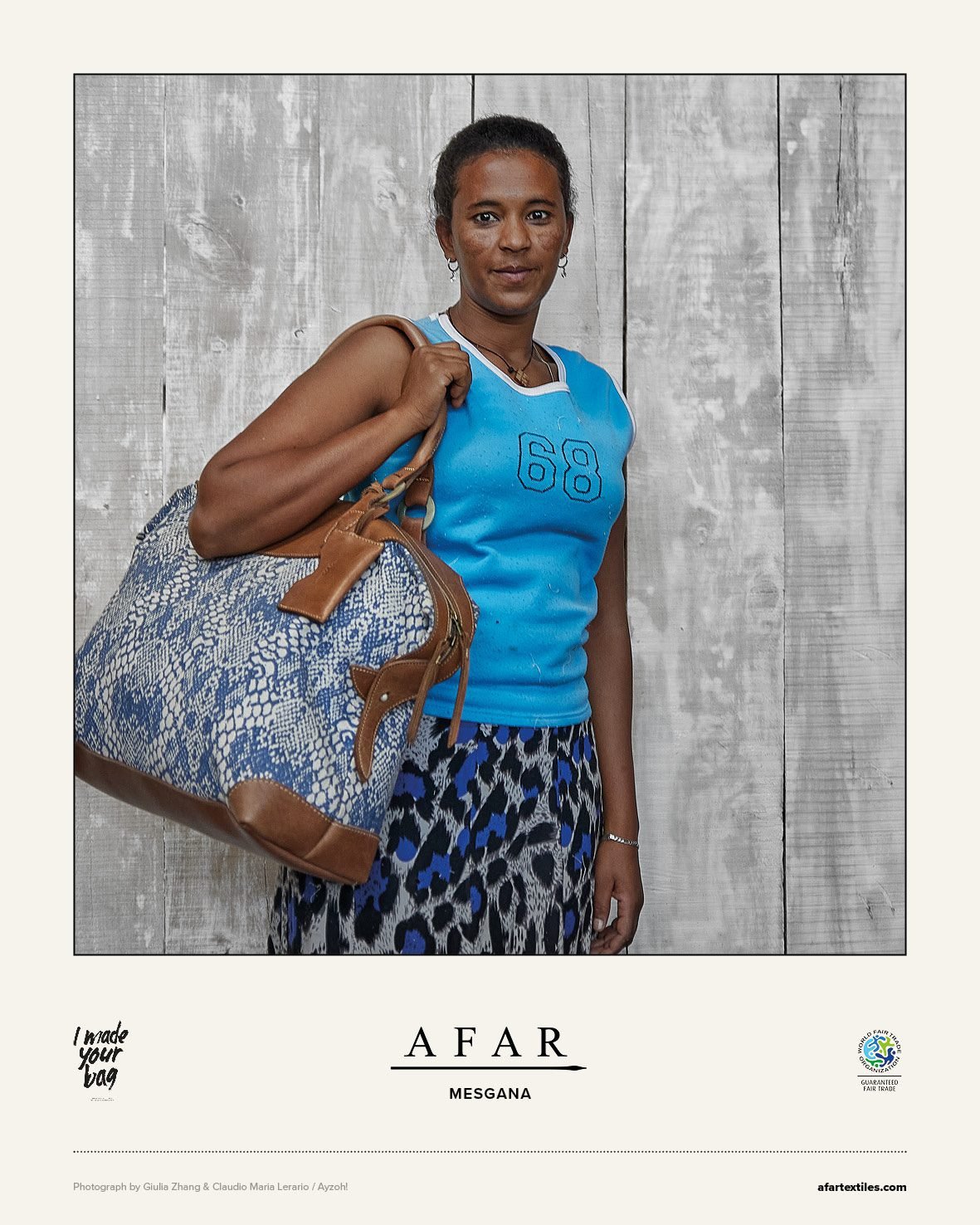
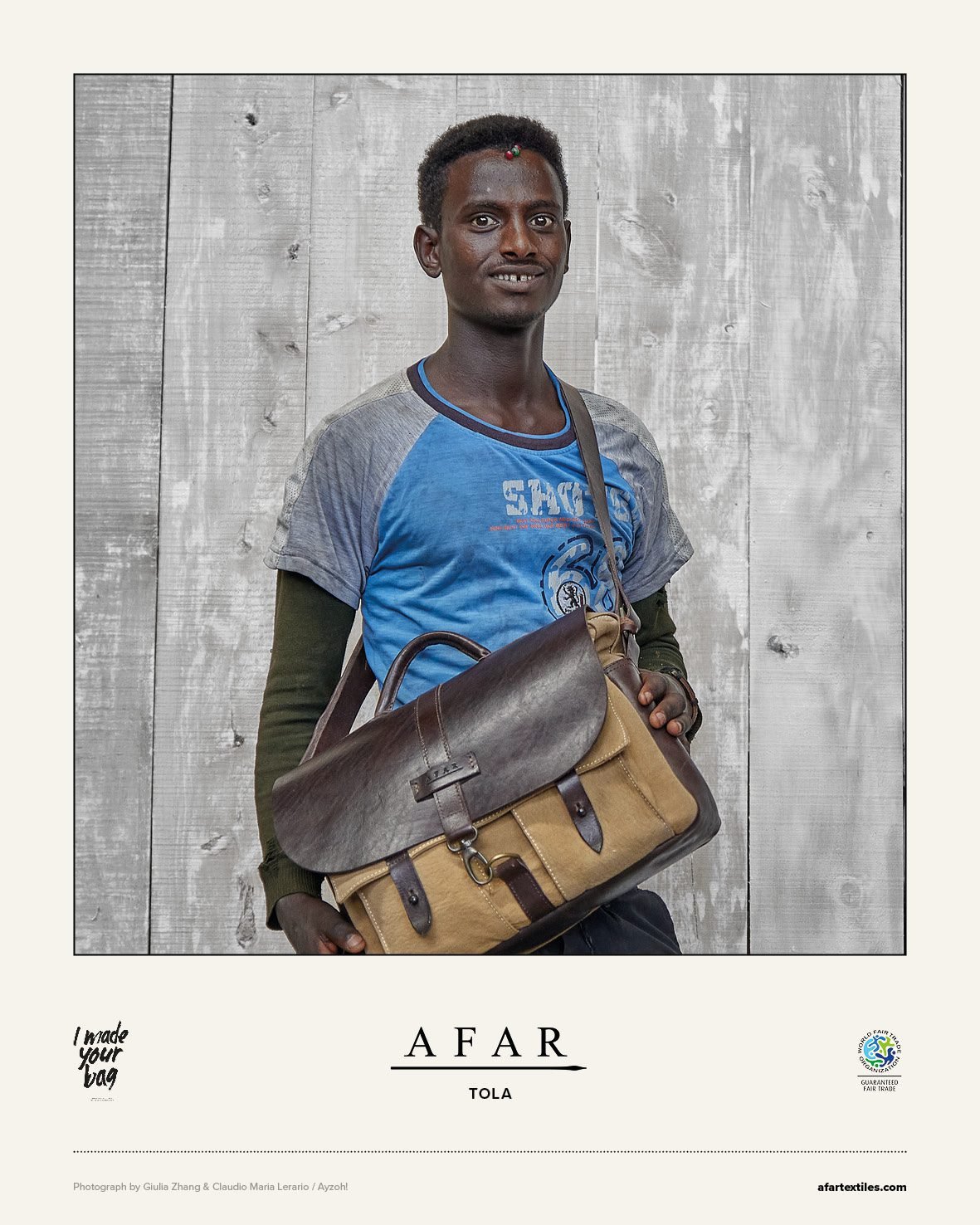
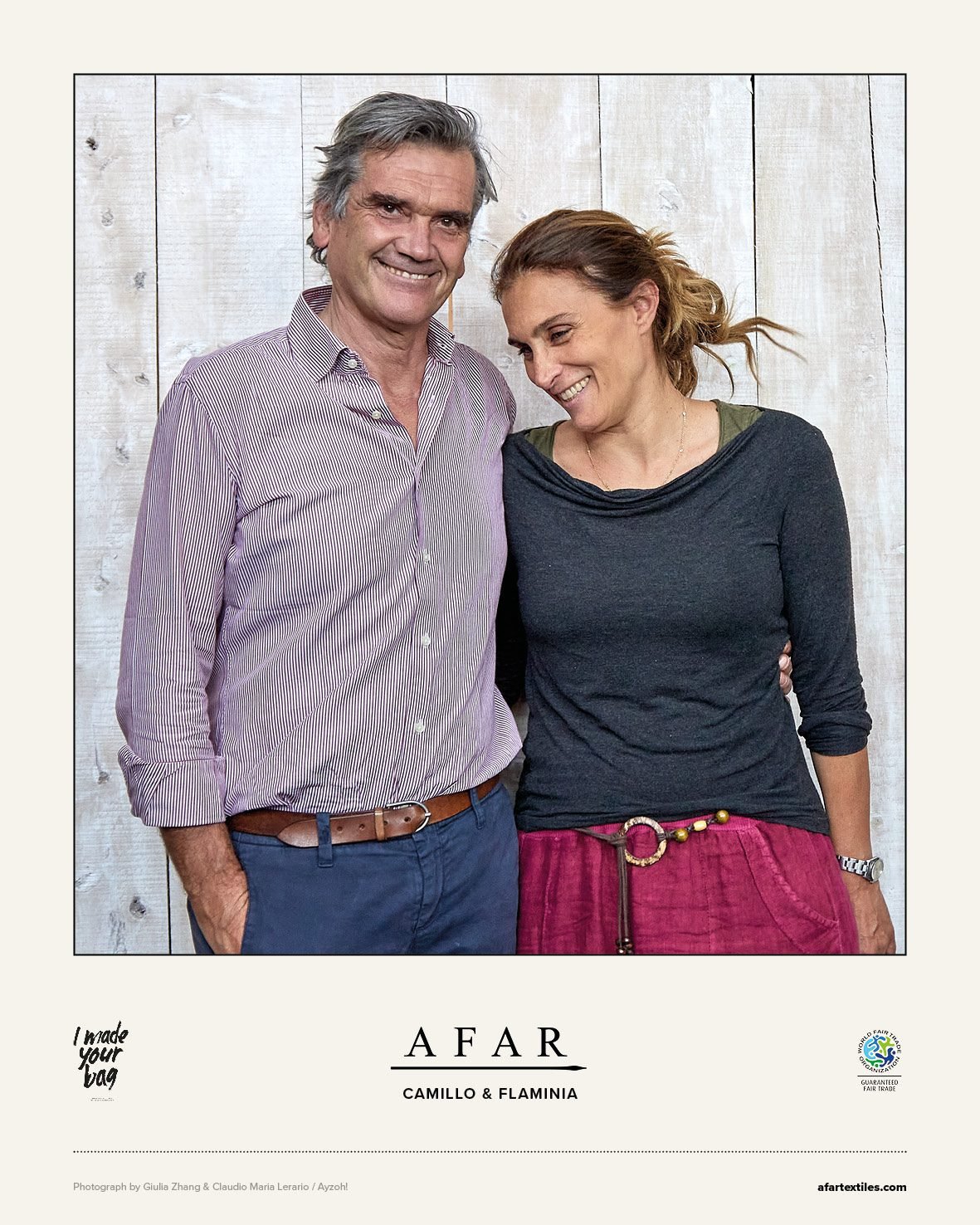
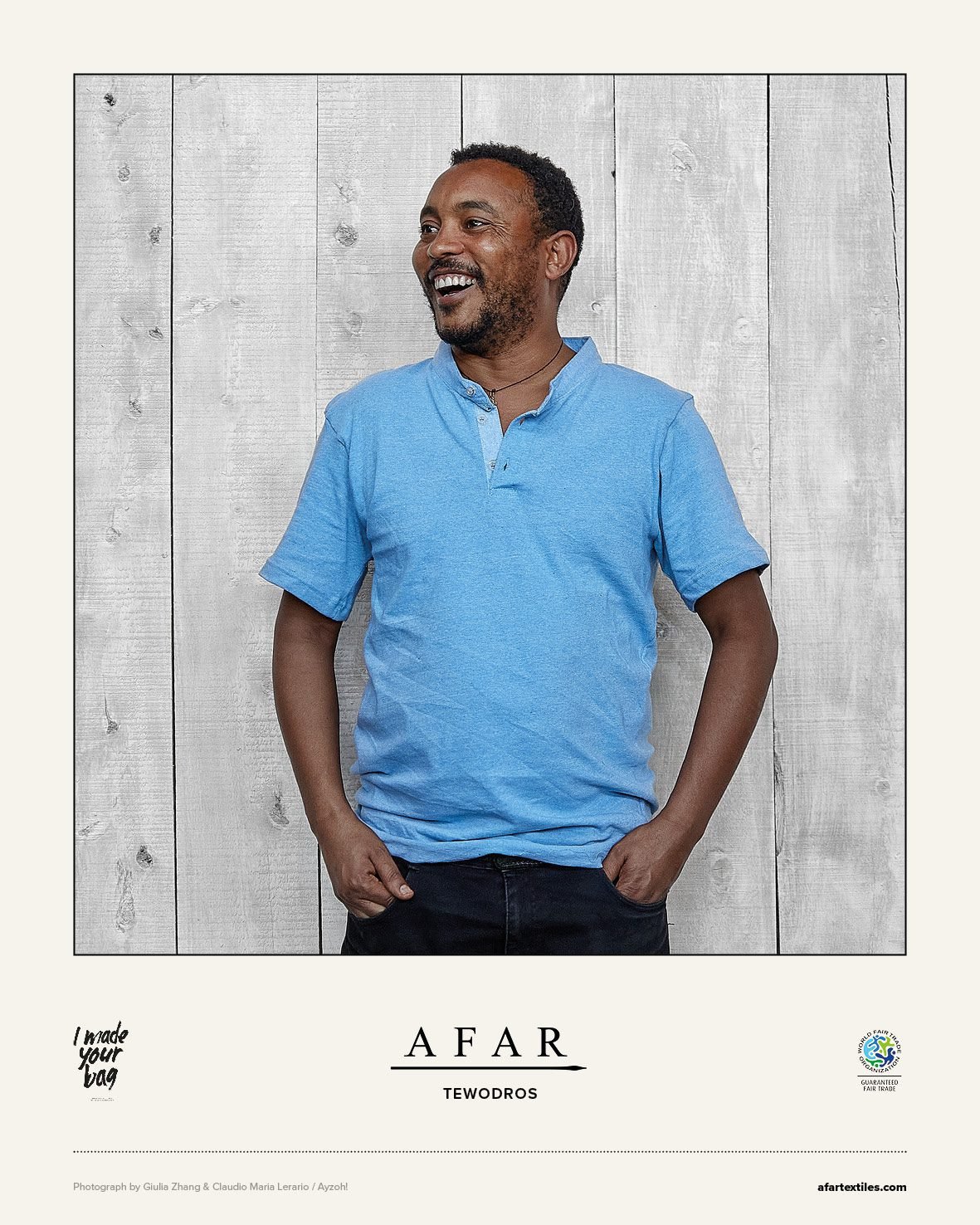
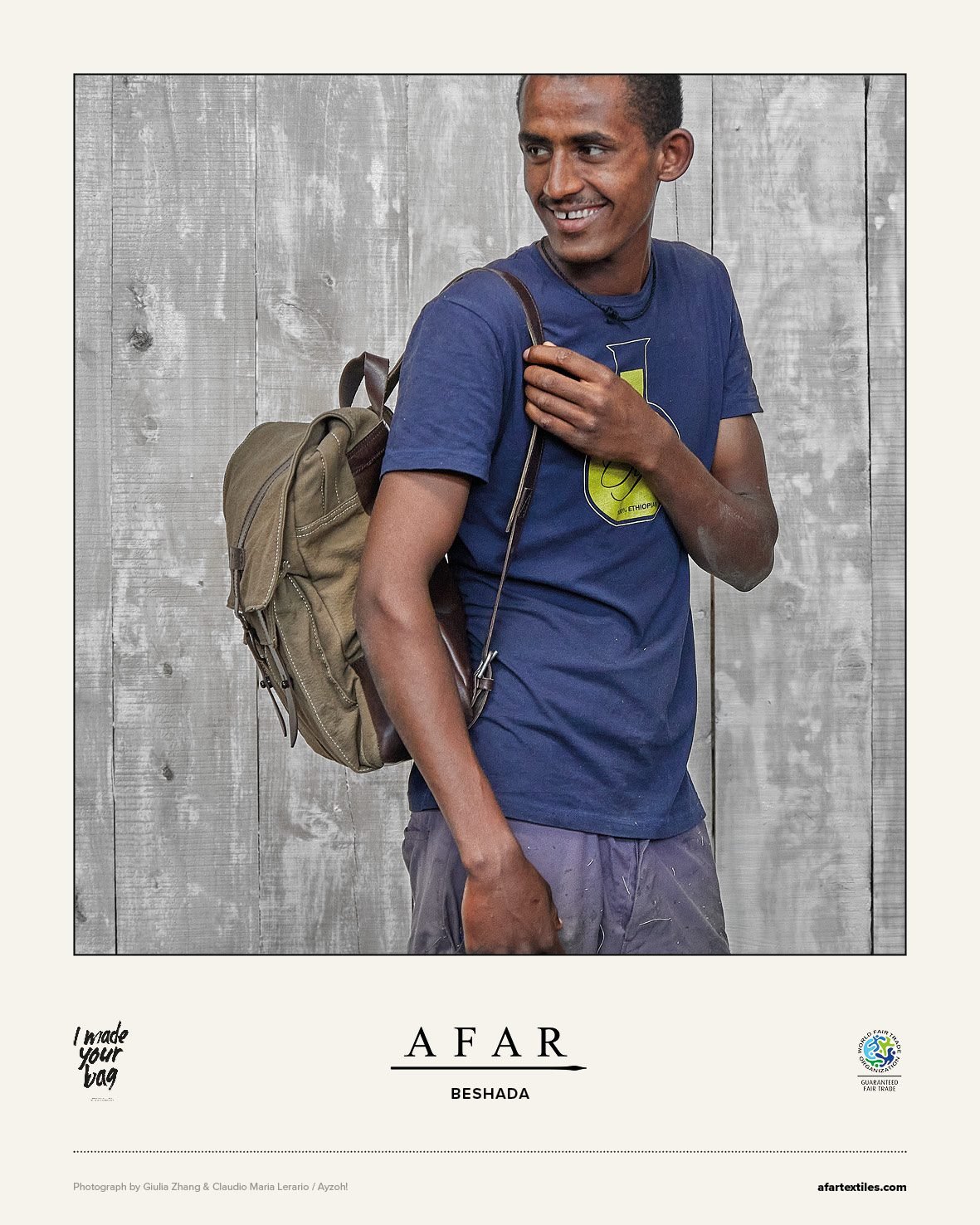
The answer begins with faces. Thirty-six portraits. Thirty-six people. Thirty-six names placed below the AFAR logo, where a brand usually leaves only its own mark.
The photographs were made in the place where the bags take shape. Canvas, leather, screens, sewing machines, tables, tools, thread. A hand aligns a piece of fabric. Another hand steadies a seam. Someone checks an edge, adjusts a handle, follows the rhythm of a machine, lifts the bag, turns it, looks again.
Each object carries a sequence of decisions. The cut of the canvas. The pressure of a hand-printed pattern. The patience of sewing. The care of finishing. The knowledge passed from one person to another, sometimes through instruction, often through repetition and attention.
A bag looks simple when it is finished. It sits on a chair, hangs from a shoulder, waits at an airport gate, crosses a city, enters a hotel room, returns home marked by dust, rain, sun, and use. In the workshop, that simplicity is built slowly. It comes from material, skill, correction, and time.
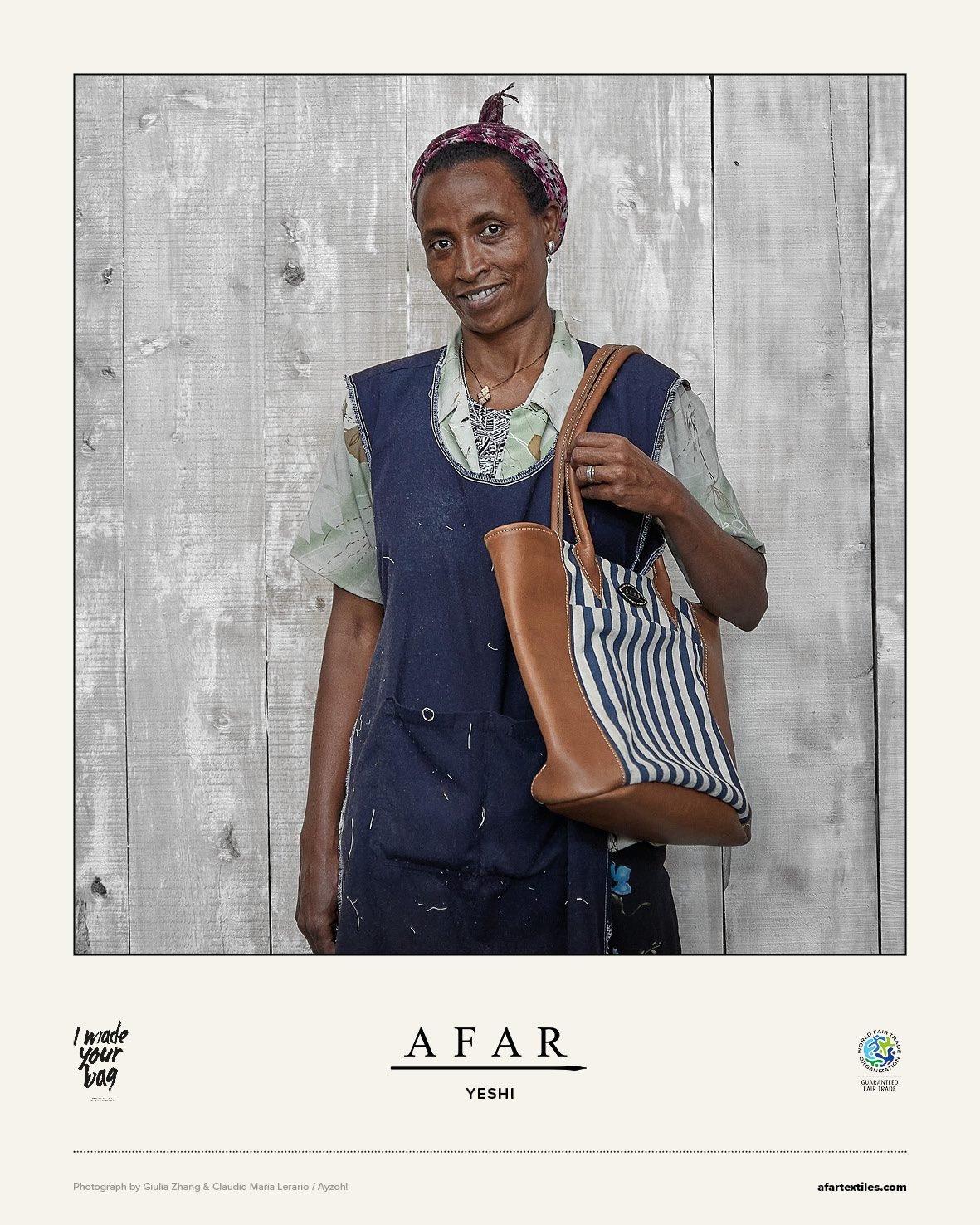
The portraits do not ask the workers to perform poverty, virtue, or gratitude. They stand with the bags they make. They look back. Some hold the object close to the body. Some let it rest in their hands. Some face the camera with a small smile; others keep a quieter expression. The series gives the viewer a direct form of information: this bag has a human origin.
From clothes to bags
“Who made my clothes?” became one of the clearest questions in contemporary fashion because it interrupted the distance between consumption and labor. AFAR asks the same question through another object.
A bag is intimate in a different way. It holds what a person decides to carry: keys, documents, books, a camera, a scarf, a passport, a phone, a small private disorder. It travels with the body. It touches the ground. It opens and closes many times a day. It becomes worn in specific places, shaped by habits.
The people who make it rarely travel with it. Their work does.
This is where transparency becomes more than a claim. It begins when a company allows the object to lead back to the workshop, and the workshop to lead back to the people. It begins when production is treated as a relationship rather than a hidden stage behind the finished product.
For AFAR, the question is direct: Who cut this? Who printed this? Who sewed this? Who checked it before it left Addis Ababa? Who gave the object its strength, its balance, its final form?
The answer cannot be reduced to one person. A bag is a collective object. It carries the work of many hands, and those hands belong to people with names, histories, families, skills, fatigue, humor, worries, and pride.
Names and faces
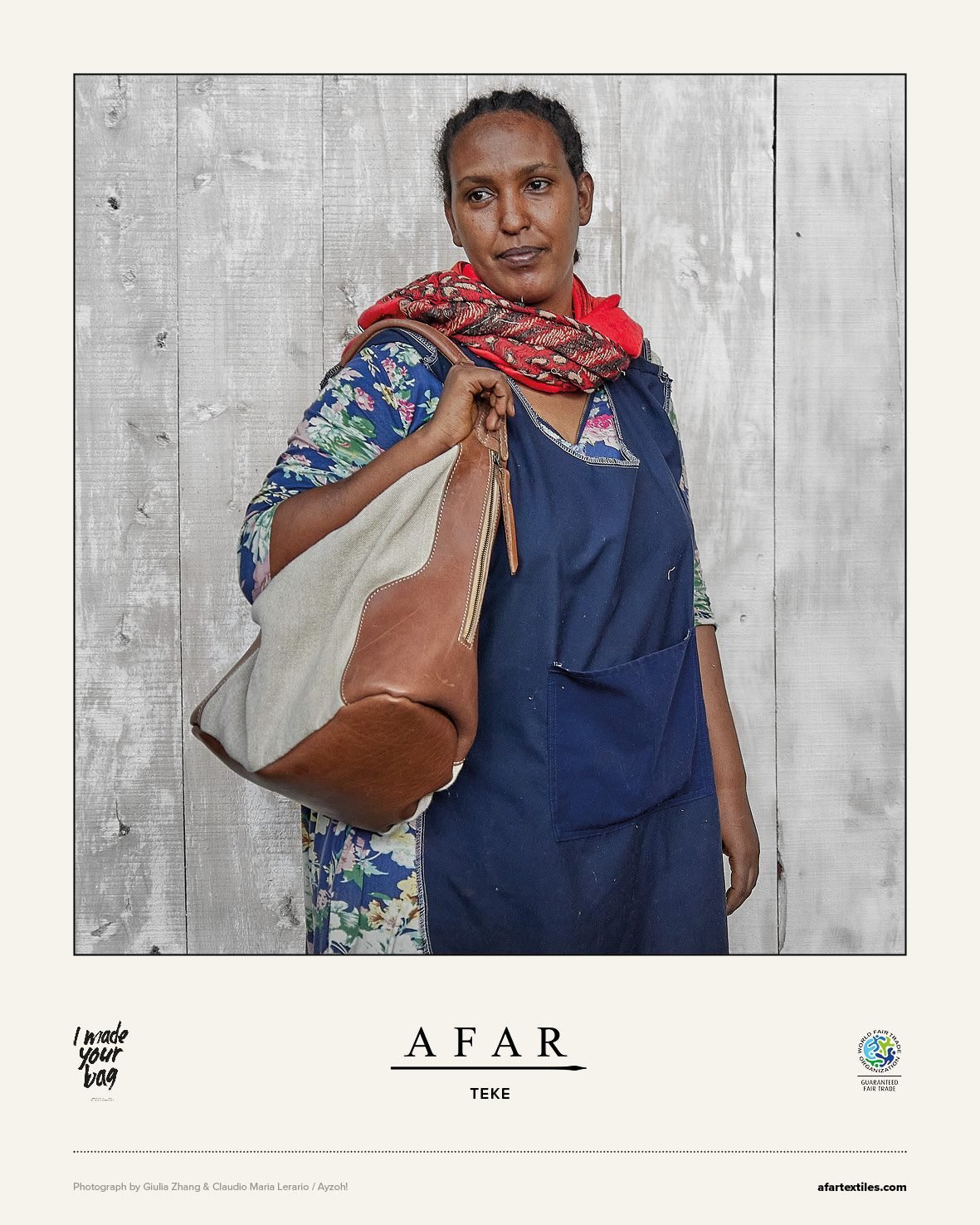
Their names are Selam, Worku, Ephrem, Birtukan, Adanech, Beshada, and many others. AFAR chose to place those names under the portraits. Ayzoh! and AFAR also considered publishing the meaning of each name, because many Ethiopian names carry deep religious, linguistic, or family histories. The idea was beautiful. It also required care.
A name should never become decoration. It belongs first to the person who carries it. Its meaning may come from Amharic, Ge’ez, the Bible, family memory, local usage, or a story that cannot be translated from outside with confidence. A quick explanation can flatten what it tries to honor.
For this reason, the series keeps the names as names. That choice matters. The name is already enough. It marks presence. It says that work has a face. It resists the anonymous language of supply chains, where people often appear only as labor, workforce, cost, capacity, or risk. A portrait can do something different. It can slow the eye. It can keep the viewer with one person at a time.
Transparency and responsibility
Fashion Revolution’s work has always pointed toward systems, not isolated gestures. Its call for transparency is a call for responsibility: brands, consumers, institutions, and producers are all part of the same chain, though they do not hold the same power.
For a small company, transparency starts with ordinary clarity. Where is the work done? Who does it? Which materials are used? Which skills are valued? What kind of workplace makes the product possible?
These questions are practical. They avoid sentimentality. They also protect the people inside the story from becoming symbols. The portraits are not a campaign of charity. They are a record of work. They show people as part of a productive system, with competence and agency. The bags are present, but they do not replace the people. The brand is present, but it does not occupy the whole frame.
This balance is important. Ethical language becomes weak when it floats above reality. It becomes stronger when it stays close to the table, the machine, the dyed fabric, the printed mark, the hand that corrects a small imperfection before anyone else sees it.
A bag is never anonymous
A bag enters the world as a finished object. In a shop or on a website, it appears clean, complete, ready to be chosen. The portrait brings back what the finished object tends to hide.
Behind each AFAR bag there is a place in Addis Ababa. There are materials selected, handled, cut, printed, stitched, assembled, checked. There are people who know how to make an object strong enough for travel and ordinary enough for daily life. There is a rhythm of work that does not appear in the product description.
Fashion Revolution gave the fashion world a question that remains useful because it is difficult to exhaust. Who made my clothes? Who made my shoes? Who made my bag? Who made the things I carry, wear, use, and replace? AFAR’s answer begins here, with 36 portraits. Names, faces, bags, and the quiet precision of daily work.